Executive Summary
Definition: A Social Impact Assessment (SIA) is a structured process that identifies, predicts, and manages the social consequences of projects before they occur.
The Process:
- Scoping – Define boundaries, stakeholders, and key social variables.
- Prediction – Forecast potential social impacts using data and stakeholder input.
- Mitigation – Design strategies to minimise risks and maximise positive outcomes.
- Monitoring – Track, measure, and adapt interventions throughout the project lifecycle.
The Value: Done right, an SIA can cut your operational risk by up to 40%. It also keeps you in line with IFC Performance Standards, which matters when you're dealing with stakeholders and investors. Bottom line: it helps your project actually succeed long-term instead of running into walls.
Strategic Overview: The Business Case for Social Impact Assessment (SIA)

Let's say your engineering is solid. Your financial models check out. But somehow your project is stuck. What happened?
Chances are, you overlooked the "soft" risks the community and social stuff that people think doesn't really matter. Except those risks aren't soft at all. They're the ones that end up costing you millions and grinding everything to a halt.
As someone who has spent years working at the intersection of technology and social impact, I’ve seen this pattern repeat across industries. Projects don’t fail because the math is wrong; they fail because the human factor was underestimated.
The “Bleeding Neck” Problem: Recognising the True Pain
Forget the textbook definition of Social Impact Assessment (SIA). This isn’t about ticking compliance boxes; it’s about cost avoidance and accelerated time-to-market.
If you're working on a big infrastructure, energy, or development project, you already know what keeps people up at night: unmanaged social risk. Here's what that looks like in practice.
-
Stalled Permits & Regulatory Gridlock: When you skip the community engagement piece, regulators start feeling the heat. Local pressure builds, and suddenly they're in no hurry to approve your permits. A process that should take six months? Try two years. And every month of delay is money down the drain.
-
Mass Protests & Physical Blockades: A single, well-organised protest can shut down a site. This isn’t just a PR issue; it’s an operational halt that burns through capital and destroys construction timelines.
-
Investor Withdrawal & Loan Covenants: In today’s ESG-driven environment, investors from BlackRock to development banks scrutinise social risk. Unresolved land rights, indigenous concerns, or labour disputes can trigger covenant breaches, leading to funding withdrawal or higher capital costs.
I’ve seen projects bleed millions simply because these risks weren’t anticipated. That’s the “bleeding neck” problem: urgent, painful, and impossible to ignore.
The Solution: SIA as a Predictive Risk-Management Framework
The Social Impact Assessment is not a bureaucratic hurdle; it’s a predictive risk-management framework. Done right, it shifts your approach from reacting to crises (protests, lawsuits, delays) to proactively identifying and mitigating them.
SIA gives you the ground-level intelligence to:
-
De-risk your project pipeline. A good Social Impact Assessment helps you spot potential community pushback before you break ground. Maybe you need to tweak your design, offer better compensation, or move a facility a few blocks over. Either way, you're avoiding headaches down the line.
-
Understand the real costs. Social mitigation isn't some fuzzy "community relations" line item it's as real as your steel and concrete budget. When you do an SIA properly, you can actually put numbers on these costs and plan accordingly.
-
Earn your social license to operate. Here's the thing: government permits are just the starting point. The real make-or-break factor is whether local communities actually want you there. That's your social license to operate, and it's not something you can buy or mandate. An SIA gives you a practical roadmap for earning that trust and support over the long haul.
This is the difference between projects that stall and projects that scale.
Roadmap: Transforming Your Risk Strategy
In the sections ahead, we’ll break down how to operationalise SIA into your business strategy:
- The Social Risk Matrix: Identifying and quantifying the 5 major threats to your investment.
- Beyond Compliance: How a strategic SIA drives down project costs and accelerates timelines.
- Operationalising the SIA: Integrating social intelligence into engineering and project management.
- Measuring Success: Key metrics (KPIs) for social performance that investors demand.
What is Social Impact Assessment (SIA)?

A Social Impact Assessment (SIA) is a predictive risk-management framework that systematically identifies, forecasts, and designs mitigation strategies for the intended and unintended social consequences of a project on local communities and stakeholders before they occur.
While environmental assessments look at the land, air, and water, SIA focuses on the human environment. It is a predictive planning tool used to analyse how a proposed intervention, whether it’s a new mine, a renewable energy plant, or an urban development, will change the lives of the people living there.
This process goes beyond simple "community engagement." It is a rigorous methodology that investigates impacts on:
- Way of Life: How people live, work, and interact daily.
- Culture: What people believe, how they do things, what matters to them.
- Community Cohesion: Basically, how stable and connected the community is, what makes it tick.
- Political Systems: Whether people actually get a say in decisions that affect their lives.
Example of Social Impact Assessments
You know what really shows the value of an SIA? Looking at actual projects where it made a difference. These aren't textbook case studies they're situations where companies did the work upfront and it paid off. We're talking about avoiding costly mistakes, keeping their reputation intact, and actually building trust with communities instead of burning bridges.
Mining & Infrastructure
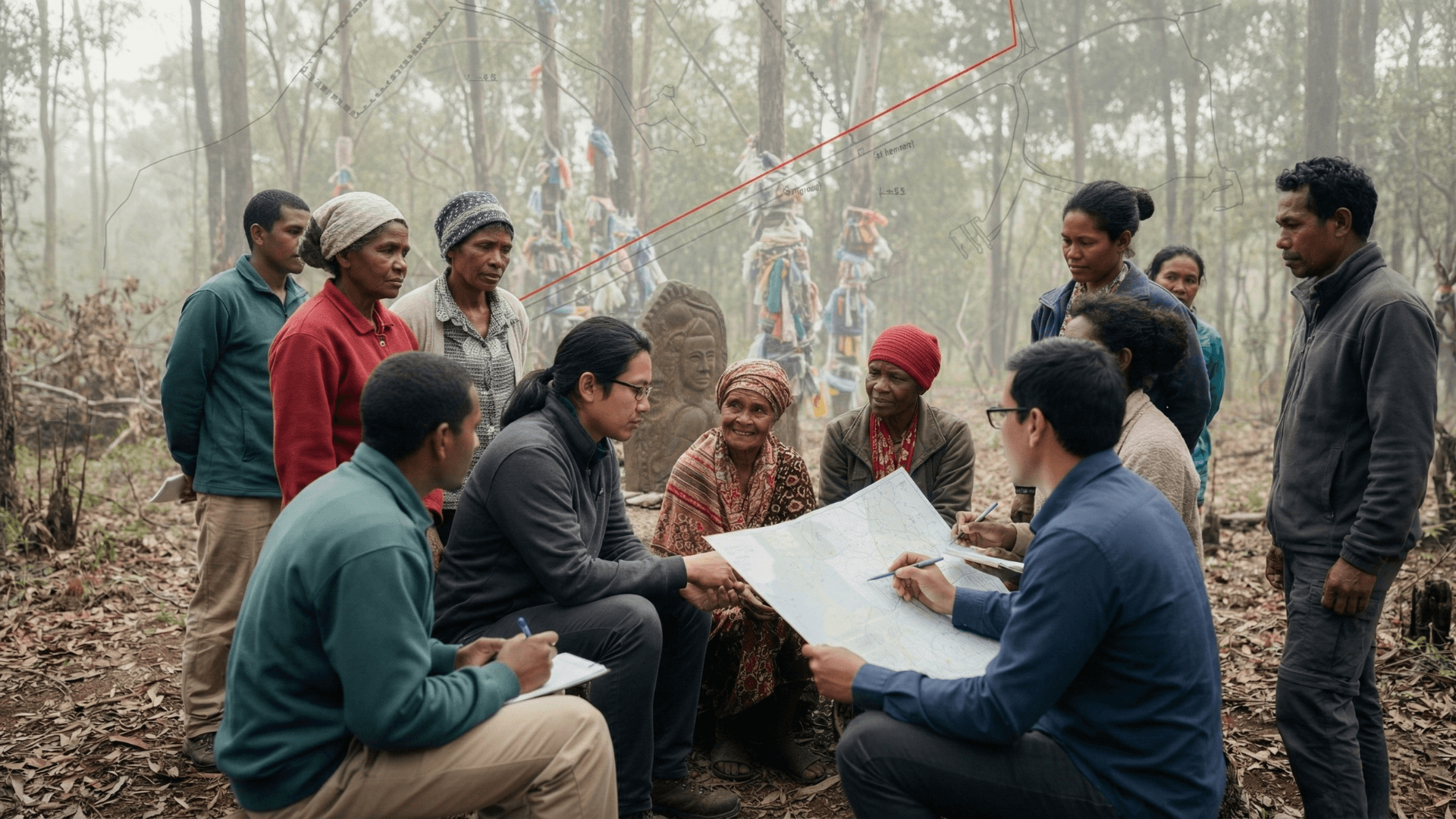
Take this example:
A mining company was planning a new haul road. On paper, everything looked good. The route made sense, it was efficient. But when the SIA team actually went out and talked to people in the area, they uncovered a problem. The proposed road would cut right through a sacred grove. And this wasn't just some patch of trees. For the community, that grove was part of their cultural heritage, connected to their identity in ways that don't show up on a map.
The findings were pretty clear: if they pushed ahead, they'd be looking at protests, regulatory headaches, and delays that would cost them serious money. The company could have ignored the warning signs, but they didn't. They made the call to reroute the road and leave the grove alone. It was the smarter move both for the community and for keeping the project on track.
The result? They avoided an estimated $5 million in delay costs and, more importantly, strengthened trust with stakeholders. What could have been a flashpoint of conflict became a demonstration of respect and foresight.
The Social Risk Matrix
| Social Risk Category | Description | Mitigation Strategy (SIA Output) | Financial Consequence |
|---|---|---|---|
| Land Rights / Resettlement | Unresolved tenure, involuntary resettlement. | Dedicated Resettlement Action Plan (RAP) compliant with IFC PS 5. | Litigation costs, permit withdrawal, Project Stall (millions/day). |
| Labour Influx / Community Health | Influx of outside workers creating housing, health, and crime strain. | Code of Conduct for workers, local procurement/hiring plan, and healthcare support. | Increased operational costs, supply chain disruption, and reputational damage. |
| Grievance Mechanism Failure | Community complaints ignored, leading to escalation. | Accessible, timely, and transparent Operational Grievance Mechanism. | Site blockades, PR crisis, investor withdrawal/covenant breach. |
Types of Social Impact Assessments
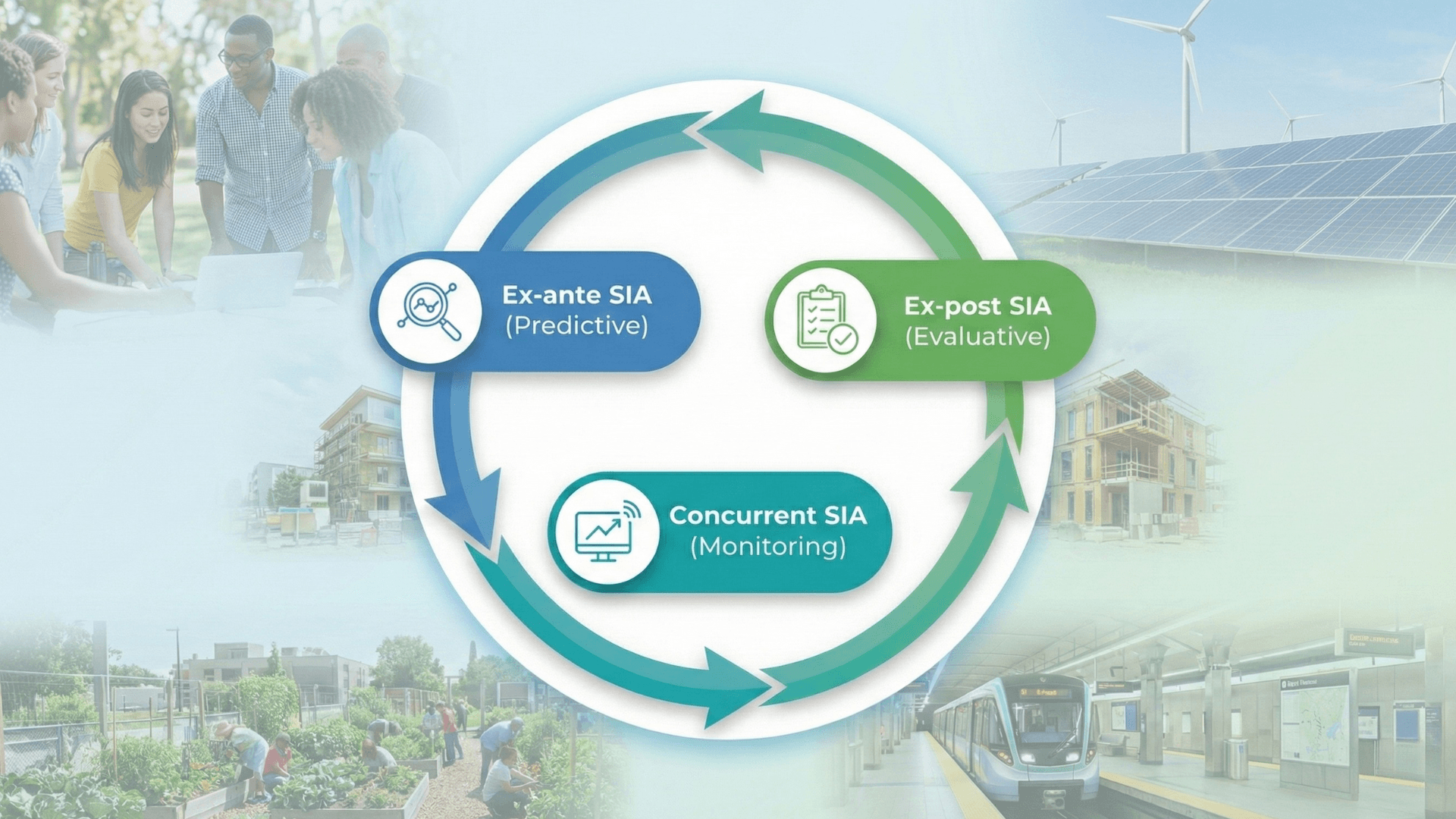
Social Impact Assessment is not a static, one-time checkbox exercise. It’s a dynamic process that evolves alongside your project’s lifecycle. Over the years, I’ve seen how the timing of an SIA completely changes its role. Sometimes it’s about predicting risks, sometimes it’s about monitoring reality, and sometimes it’s about learning from the past.
Depending on when the assessment is conducted, it serves a different strategic purpose for both the investor and the operator. Here are the three critical stages:
1. Ex-ante SIA (Predictive)
Timing: Conducted before the project starts. This is the most common and arguably the most critical form of SIA. Think of it as your primary risk management tool during feasibility and planning.
- Purpose: To forecast potential social risks and conflicts before capital is committed.
- Strategic Value: It allows project designers to “design out” negative impacts. For example, I’ve seen projects move an access road to avoid a sacred site or adjust hiring practices to include local labour. Those small pivots saved millions in potential delays.
- Outcome: A robust Social Management Plan (SMP) that helps secure the initial Social License to Operate (SLO).
2. Concurrent SIA (Monitoring)
Timing: During implementation and operation. Here's the thing about social impacts they almost never play out exactly how you thought they would. That's where Concurrent SIA comes in. You're tracking what's actually happening on the ground and comparing it to what you predicted.
- Purpose: Monitor real impacts as construction or operations move forward, and see how they stack up against your predictions.
- Why it matters: It gives you the flexibility to adapt. Let's say your grievance system is picking up increased tension in the community. With Concurrent SIA, you can adjust the course right away instead of waiting until there's a protest blocking your site.
- What you get: Ongoing tweaks to your Social Management Plan that keep communities on board and your project moving forward.
3. Ex-post SIA (Evaluative)
Timing: After project completion or closure. This is similar to Social Impact Measurement, but you're asking a different question. Instead of just measuring outcomes, you're auditing the long-term changes your project caused in the community.
- Purpose: Figure out if the project actually improved things for the community, or if it left behind problems like economic dependency on your operations or lingering environmental health issues.
- Why it matters: It ties up loose ends on social liabilities and gives you solid lessons learned for your next project. You're not repeating the same mistakes twice.
- What you get: A real understanding of what your project left behind, and whether you still have responsibilities to deal with.
Key Distinction: Prediction vs. Validation
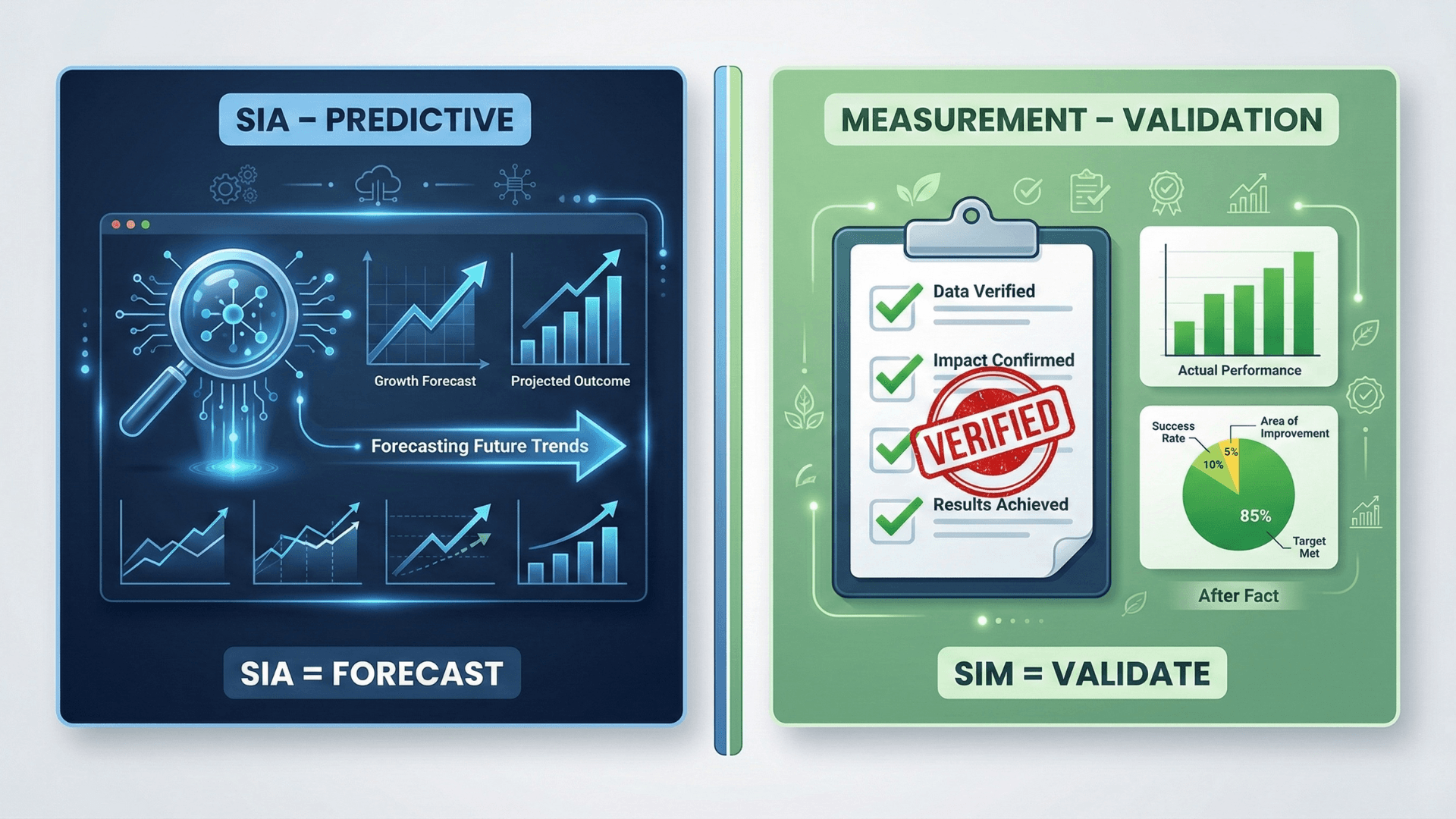
It is critical not to confuse Assessment with Measurement. While they are related, they serve different functions in the project lifecycle.
-
Social Impact Measurement is retrospective. It focuses on data collection after the fact to validate results and prove value. See our guide on Social Impact Measurement
-
Social Impact Assessment (SIA) is prospective. It is used before a project starts to predict outcomes, forecast risks, and design mitigation strategies.
Think of it this way: If Measurement is the audit that tells you how you performed, SIA is the strategic business plan that ensures you don't go bankrupt in the process. It is the difference between asking "What happened?" and asking "What will happen, and how can we prepare for it?"
Social Impact Assessment (SIA) vs. Social Impact Measurement (SIM)
| Feature | Social Impact Assessment (SIA) | Social Impact Measurement (SIM) |
|---|---|---|
| Primary Goal | Prediction & Management<br>(What might happen?) | Evaluation & Quantification<br>(What did happen?) |
| Timing | Ex-Ante: Done before and during the project to shape and inform project design. | Ex-Post: Done after the work is completed or at checkpoints to measure outcomes. |
| Key Output | Social Management Plan (SMP): A roadmap for reducing negatives and boosting positive impacts. | Impact Report / SROI Calculation: Evidence of delivered value and achieved targets. |
| Focus | Risk Mitigation: Aligning stakeholders and securing a social license to operate. | Accountability: Demonstrating actual results to investors, regulators, and the public. |
Why is Social Impact Assessment Important? (The Business Case)
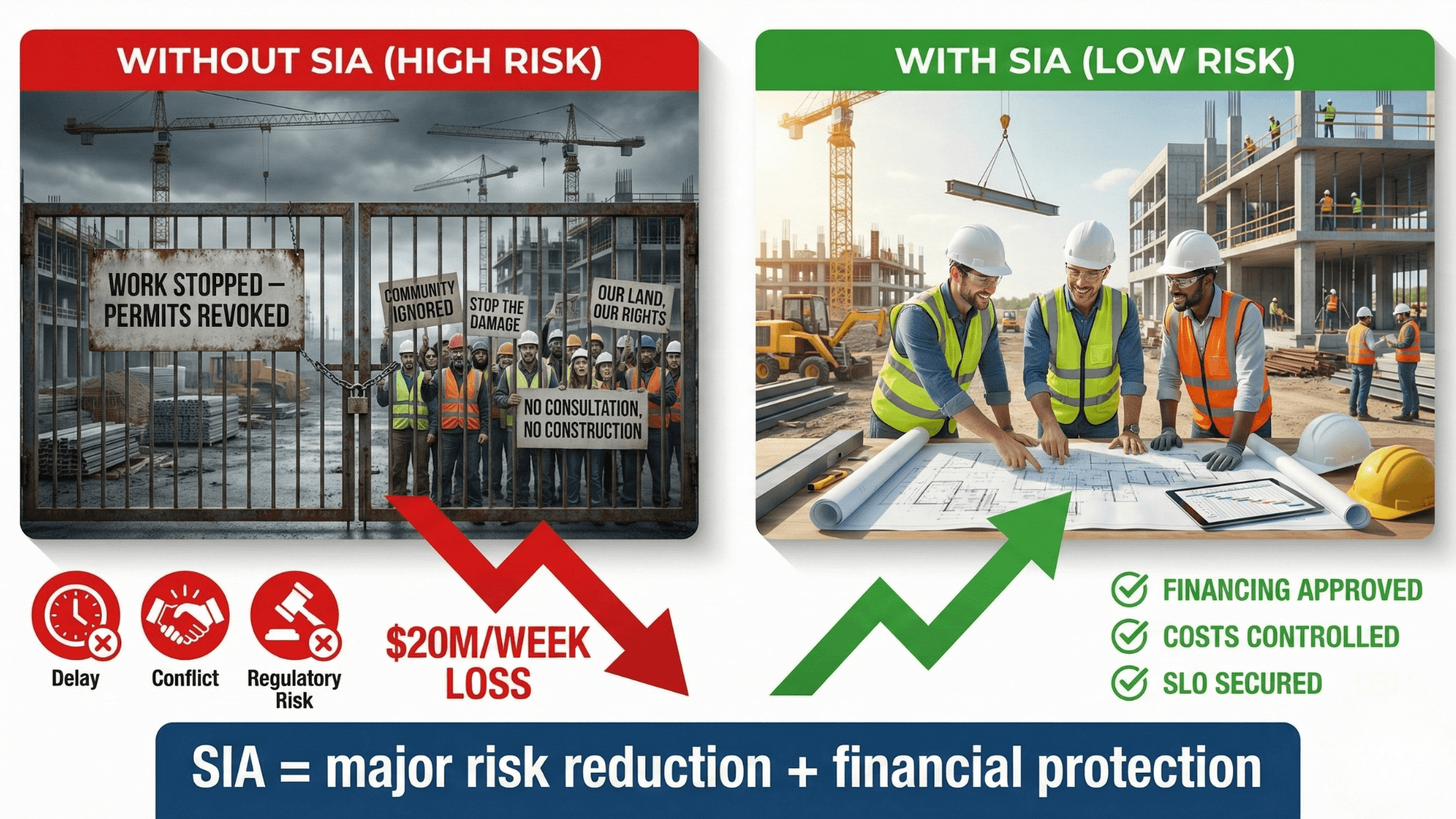
Look, SIA isn't just about doing the right thing anymore, though that's part of it. For corporate leaders today, it's about protecting your bottom line.
If you don't see community concerns coming and deal with them proactively, you're looking at delays, reputation hits, and real money walking out the door. Companies that build SIA into their project planning from the start? They're protecting shareholder value and setting themselves up to weather whatever comes next.
How does SIA reduce project costs?
Community opposition is not just reputational; it’s measurable in dollars.
- A famous study by Davis & Franks (2014) titled "Costs of Company-Community Conflict in the Extractive Sector found that a major mining project with capital expenditure between $3–5 billion can suffer costs of ~$20 million per week of delayed production due to community conflict.
- These disruptions compound into billions in lost value, underscoring why proactive stakeholder engagement and impact assessment are essential risk management tools.
Is SIA required for project financing?
Global investors and lenders increasingly demand proof of robust social safeguards. Without SIA, projects risk being locked out of financing channels.
-
The Equator Principles: The Equator Principles apply globally to the majority of international project finance debt in emerging markets.
-
IFC Performance Standard 1: Widely regarded as the gold standard for global funding, it mandates stakeholder engagement and impact management as prerequisites for capital access.
-
India-specific compliance: If you're working in India, the 2013 Land Acquisition Act has serious teeth. It requires community consultation, fair compensation, and proper rehabilitation, and it's not optional. Skip any of these steps, and you're risking project shutdowns and lawsuits. That's why SIA isn't just good practice; here it's essential if you want to keep your operations running.
Step-by-Step Guide: How to Conduct a Social Impact Assessment (SIA)
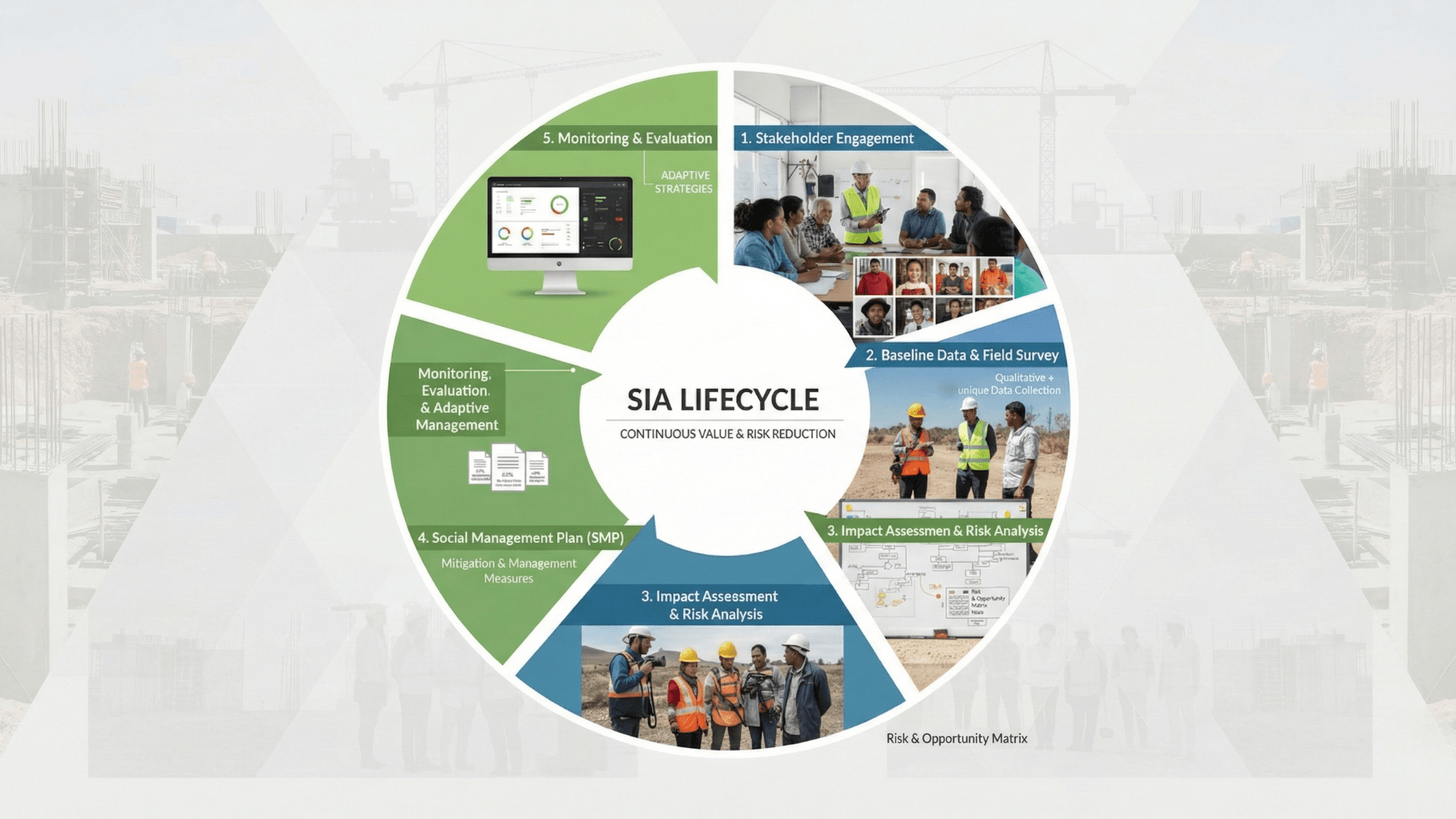
Step 1: Scoping & Stakeholder Profiling
- Action: Define the Area of Influence. This extends beyond the construction site to include labour influx zones, downstream water users, and surrounding communities.
- Tool: Use a Power vs. Interest Grid to map stakeholders by their influence and level of concern.
- Deliverable: A clear Terms of Reference (ToR) that sets boundaries, objectives, and stakeholder priorities for the assessment.
Step 2: Baseline Data Collection
What you're doing: Getting a clear picture of social and environmental conditions before your project starts. How: You'll want to mix different sources. Pull secondary data like census info and government reports, but also do your own fieldwork things like community appraisals, household surveys, and focus groups. Quick heads up: Government data can be years out of date, so don't lean on it too heavily. Your own field data is what gives you accuracy and credibility when things get questioned later. What you end up with: A solid baseline dataset that you'll use to measure your project's actual impacts down the road.
Step 3: Impact Prediction & Significance Assessment
- Action: Conduct a “What If” analysis to forecast potential impacts.
- Matrix: Evaluate each impact using a Likelihood vs. Severity framework.
- Example: Building a road (Action) → Increases dust (Impact) → Respiratory issues for the nearby village (Consequence).
- Deliverable: An Impact Significance Matrix that prioritises risks and highlights areas requiring mitigation.
Step 4: Mitigation & The Social Management Plan (SMP)
- Action: Develop mitigation measures using the Hierarchy of Controls: Avoid → Minimise → Restore → Compensate.
- The SMP: This is the most valuable output of the SIA. It assigns responsibility, timelines, and budget to each mitigation measure, ensuring accountability.
- Deliverable: A Social Management Plan (SMP) that integrates mitigation into project operations and funding structures.
The Blueprint: Core Components of a Social Management Plan (SMP)
The SMP is the operational blueprint that integrates social commitments directly into project execution. A robust SMP must include:
- Action Item Register: A matrix detailing every mitigation measure, responsible party (e.g., Construction Manager, Community Relations Lead), budget allocated, and completion deadline.
- Grievance Redress Mechanism (GRM): A documented, multi-channel process (hotline, in-person, online) for receiving, logging, tracking, and resolving community complaints transparently.
- Monitoring & Evaluation (M&E) Framework: Key Performance Indicators (KPIs) for social performance, such as: * Grievance Resolution Rate (e.g., 90% resolved within 30 days) Local Employment Rate (% of jobs filled by local residents) Consultation Frequency (e.g., Quarterly town hall meetings).
- Capacity Building Plan: Strategies to train project staff (from security to engineers) on the social risks and cultural sensitivity protocols defined in the SIA.
Step 5: Monitoring & Adaptive Management
- Concept: SIA is not a one-off report; it’s a continuous cycle.
- Action: Establish monitoring systems to track impacts and adapt strategies as conditions evolve.
- Deliverable: Monitoring reports and adaptive management frameworks that keep the project aligned with community expectations and compliance requirements.
Tools & Technology: Modernising the SIA
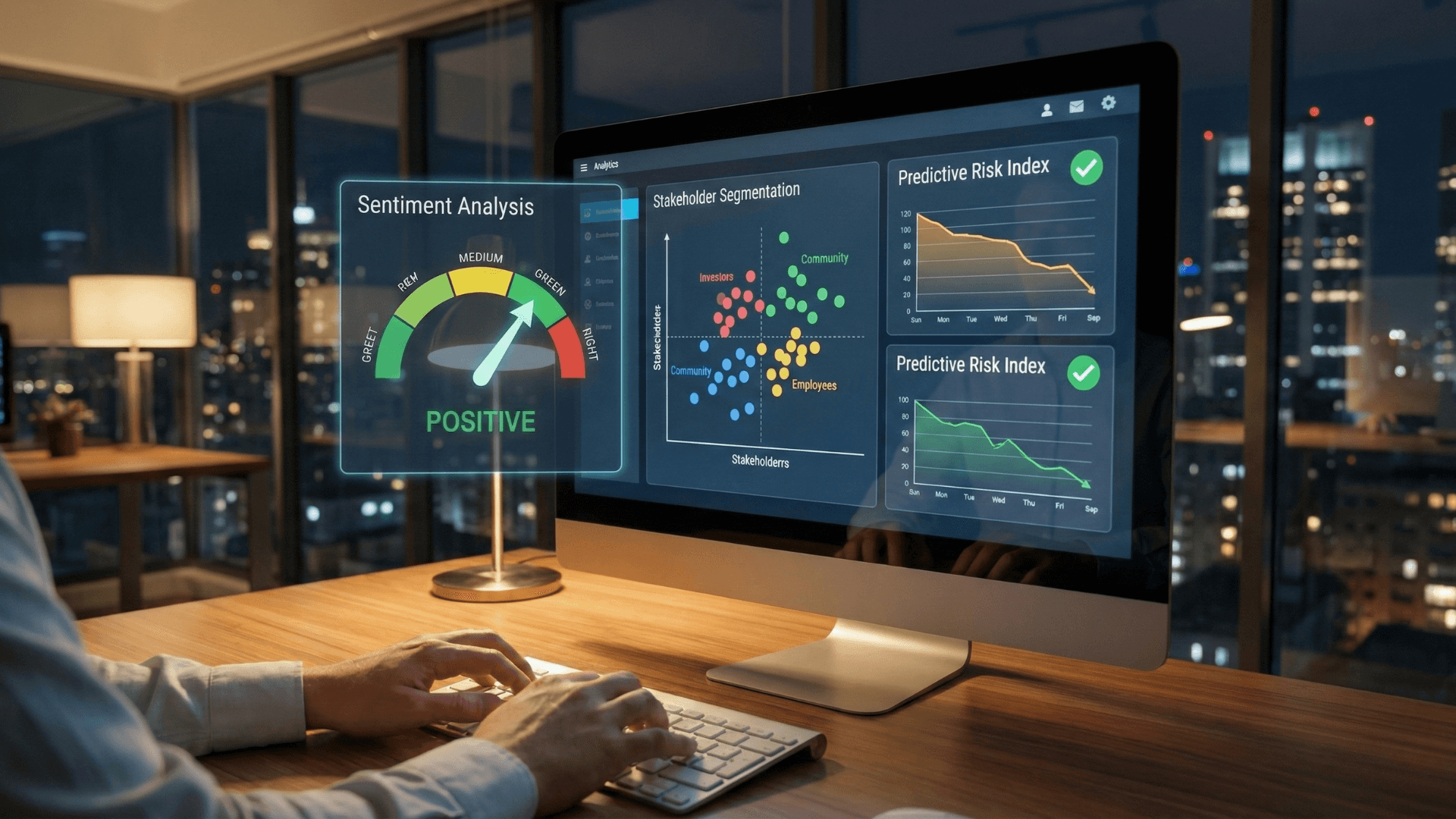
Here's the problem with how most SIAs get done: they turn into static PDFs and spreadsheets that sit in a folder somewhere. Nobody looks at them again, and they definitely don't help with real-time decisions. Which kind of defeats the whole point, SIAs are supposed to help you manage risks and engage stakeholders as things unfold.
Traditional Tools: Why They Fall Short
- Focus Group Discussions: Great for getting qualitative insights, but tough to scale up when you're dealing with large projects.
- Surveys: They give you numbers, but the data often ends up scattered across different files, inconsistent, and slow to actually process.
- The result? You've got bits and pieces of information that don't connect to each other, and good luck trying to trace anything back later.
The Modern Solution: Our AI-Powered Intelligence CSR Tool, Relific
Relific changes how SIA works. Instead of a static PDF you file away, you get a live dashboard that updates in real time.
Key Features
Unified Data Collection (Mobile): Your field teams can capture stakeholder feedback on the spot using mobile devices. Centralized Analysis: All your data flows into one platform, so you're not dealing with siloed information anymore. You can actually compare things across the board. Automated Reporting: Dashboards and reports generate automatically as data comes in. Less manual work, faster decisions.
The Business Benefit: Investor Confidence
Relific doesn’t just modernise SIA, it makes it auditable and investor-ready.
- Traceability: Every data point is logged, tracked, and linked to its source.
- Audit Trails: Investors and regulators gain confidence through transparent, verifiable records.
- Strategic Value: Projects demonstrate compliance, risk mitigation, and proactive stakeholder engagement all in formats that financiers trust.
Challenges in Conducting a Social Impact Assessment (SIA)

Even the most well-intentioned SIA runs into real-world friction. Over the years, I’ve seen these challenges derail timelines, erode trust, and dilute impact. Here’s what you need to watch for and how to stay ahead of them.
Attribution Gap
- The challenge: Measuring impact isn’t always straightforward. You might see a rise in household income, but was it your project, or just a good harvest season?
- Why it matters: If you can’t isolate your contribution, you risk overstating benefits and losing credibility with stakeholders and investors.
- What to do: Use mixed-method evaluations, think control groups, counterfactual analysis, and triangulated data to draw a clear line between your intervention and the outcome.
Stakeholder Fatigue
- The challenge: Communities are tired. They’ve filled out surveys, sat through consultations, and shared their stories only to see little change.
- Why it matters: When people feel unheard, trust erodes. Participation drops. And your data quality suffers.
- What to do: Close the loop. Share findings, show what’s being done, and make community voices visible in your decisions. Engagement isn’t a checkbox; it’s a relationship.
Optimism Bias
- The challenge: Planners often assume the best. They expect communities to adapt, benefits to outweigh costs, and risks to stay manageable.
- Why it matters: This mindset creates blind spots. You miss early warning signs, underestimate resistance, and expose the project to reputational damage.
- What to do: Build in scenario planning. Stress-test your assumptions. Ask, “What’s the worst that could happen?” and plan for it.
SIA Risk Readiness Checklist
Before you launch your Social Impact Assessment, ask yourself these questions. They’ll help you anticipate the common pitfalls and ensure your assessment is credible, actionable, and trusted by both communities and investors.
- Have we defined clear indicators to measure project-specific outcomes?
- Are we using control groups or counterfactual analysis to separate project impact from external factors?
- Do we have a plan to triangulate data (quantitative + qualitative) for credibility?
- Are we engaging communities with purposeful consultations, not just repetitive surveys?
- Do we have a feedback loop to show communities how their input shaped decisions?
- Are we balancing data collection with visible action to maintain trust?
- Have we stress-tested our assumptions with worst-case scenarios?
- Are we documenting potential negative impacts alongside expected benefits?
- Do we have contingency plans if community resistance escalates?
A credible SIA isn’t just about collecting data; it’s about anticipating risks, respecting communities, and planning for reality, not just optimism. This checklist helps project teams move from reactive firefighting to proactive risk management.
Conclusion

A Social Impact Assessment (SIA) is not just about compliance; it’s your insurance policy against social risk. It protects profits, accelerates approvals, and builds trust with communities and investors alike.
Don’t leave your social impact to chance.
How We Can Help You Implement Social Impact Assessment
Conducting an SIA is complex. It requires the combined expertise of sociologists, data specialists, and legal advisors. Few organisations have all of these capabilities in-house. That’s where we come in: we provide the full team to deliver a credible, investor-ready assessment.
Our Services
- Baseline Data Collection: Establish the “before” picture with rigorous field and desk research.
- Stakeholder Engagement & Consultation: Build trust through meaningful dialogue and transparent communication.
- Social Management Plan (SMP) Development: Translate findings into actionable strategies with clear responsibilities and budgets.
- Third-Party Impact Verification: Provide independent validation to strengthen investor confidence and regulatory compliance.
Ready to de-risk your project capital? Speak directly with our SIA specialists to scope your project's social risk, integrate an SMP, and secure your Social License to Operate.
Frequently Asked Questions
Q1. Is Social Impact Assessment mandatory for CSR?
Not always legally required, but it's pretty much essential if you want to secure your social license to operate. Major regulators like the EU and finance institutions like the IFC are increasingly expecting solid SIA work.
Q2. Who should conduct an SIA for maximum credibility?
Bring in an independent, third-party consultant to lead it. That gives you neutrality, real expertise, and the credibility you need when dealing with investors and regulators. Your internal team can help, but you need that external validation.
Q3. How long does an SIA take?
Usually 3 to 6 months, but it depends on your project size, how complex your local stakeholder situation is (like if you're working with indigenous groups), and whether you already have baseline data or need to collect it from scratch.
Q4. What sectors need SIA most urgently?
Industries with big community impacts and environmental footprints: mining, large infrastructure, oil and gas, renewable energy, and agribusiness. These face the highest social and reputation risks.
Q5. How does SIA affect project financing?
For a lot of lenders, especially those following the Equator Principles or IFC Performance Standards, SIA is non-negotiable. They won't release funds until you can show you've done proper SIA work.
Q6. What's the biggest risk of skipping an SIA?
Community conflict and regulatory delays you didn't see coming. Some studies show major projects can lose $20 million per week when production stalls due to social issues. SIA helps you avoid those costs.
Q7. Can SIA improve ROI?
Absolutely. Think of it as protecting your profits. When you prevent expensive delays, avoid lawsuits, and maintain stable community relations, you're directly protecting your bottom line and getting to market faster.
Q8. How is SIA different from Environmental Impact Assessment (EIA)?
Environmental Impact Assessment (EIA) looks at the natural environment air, water, wildlife. SIA looks at the human side livelihoods, culture, health, how local politics work. Most projects need both, and they're usually done at the same time to cover all your bases.