1. Introduction: From Scattered Efforts to Strategic Impact
“91% of all listed companies (by market cap) disclose sustainability-related information” – OECD Global Corporate Sustainability Report 2025
Corporate Social Responsibility (CSR) was often pushed to the sidelines for decades. It typically involved just one person managing philanthropy using spreadsheets and goodwill. However, things have changed significantly recently. Today, 83% of consumers expect companies to actively promote ESG best practices, and 86% of employees prefer to work for organisations that share their values (PwC). The message is loud and clear: stakeholders are no longer asking if you have a CSR strategy; they want to know how well you are managing it and proving it to the world.
Many organisations are still caught in manual chaos. They juggle spreadsheets, search for data across departments, and view impact reporting as a task to complete once every year. This outdated approach is not only inefficient but also a strategic risk. More than 90% of S&P 500 companies now publish ESG reports (Governance & Accountability Institute).
This gap is where CSR Management Software comes into the picture.

Definition:
You may ask, “What exactly is CSR Management Software?” The simplest answer is that it is a centralised digital platform that helps organisations plan, track, manage, and report on their corporate social responsibility, sustainability, and ESG initiatives.
Analogy:
Think of it as an ERP system. Instead of managing supply chains or finances, it focuses on your company’s positive impact on society and the environment. This includes tracking volunteer hours, charitable donations, carbon emissions, diversity metrics, and community engagement projects. It acts as a unified hub for measuring and improving social value.
Core Purpose:
The main purpose of CSR Management Software is to shift CSR efforts from being a reactive, compliance-driven function to a proactive, strategic, and data-driven approach.
By adopting CSR Management Platforms, businesses can:
- Align initiatives with ESG standards and sustainability frameworks.
- Provide transparent reporting to regulators, investors, and communities.
- Strengthen brand reputation by showing positive, measurable results with the help of CSR Impact Measurement Tools.
- Show accountability and long-term value through ESG management software modules and AI-driven analytics.
Growing Importance in India and Beyond:
In markets where the law requires CSR spending (eg, India), CSR Management Software and CSR Platforms in India are becoming essential for companies. These tools help ensure compliance, improve impact, and build trust.
Around the world, top CSR Management Software companies are integrating advanced features. These features centralise data and give useful insights. They are changing CSR from an expense into a key part of a business's resilience and reputation. The global CSR Software market is growing fast. A Market Analysis Report shows it was valued at about $974 million in 2024, and it is expected to reach $1.72 billion by 2030.
Why Does It Matter:
Choosing the best CSR management software or the right CSR software solutions is now essential rather than being optional. It plays a significant role in how businesses operate, stand out, and contribute to society. Digital transformations in this area have made CSR measurable, scalable, and a vital part of corporate strategy.
The companies that leverage these robust CSR Impact Measurement Tools are not only better positioned to meet stakeholder expectations but also to achieve superior financial performance, proving that responsible business is smart business.
2. Must-Have Features in CSR Management Software
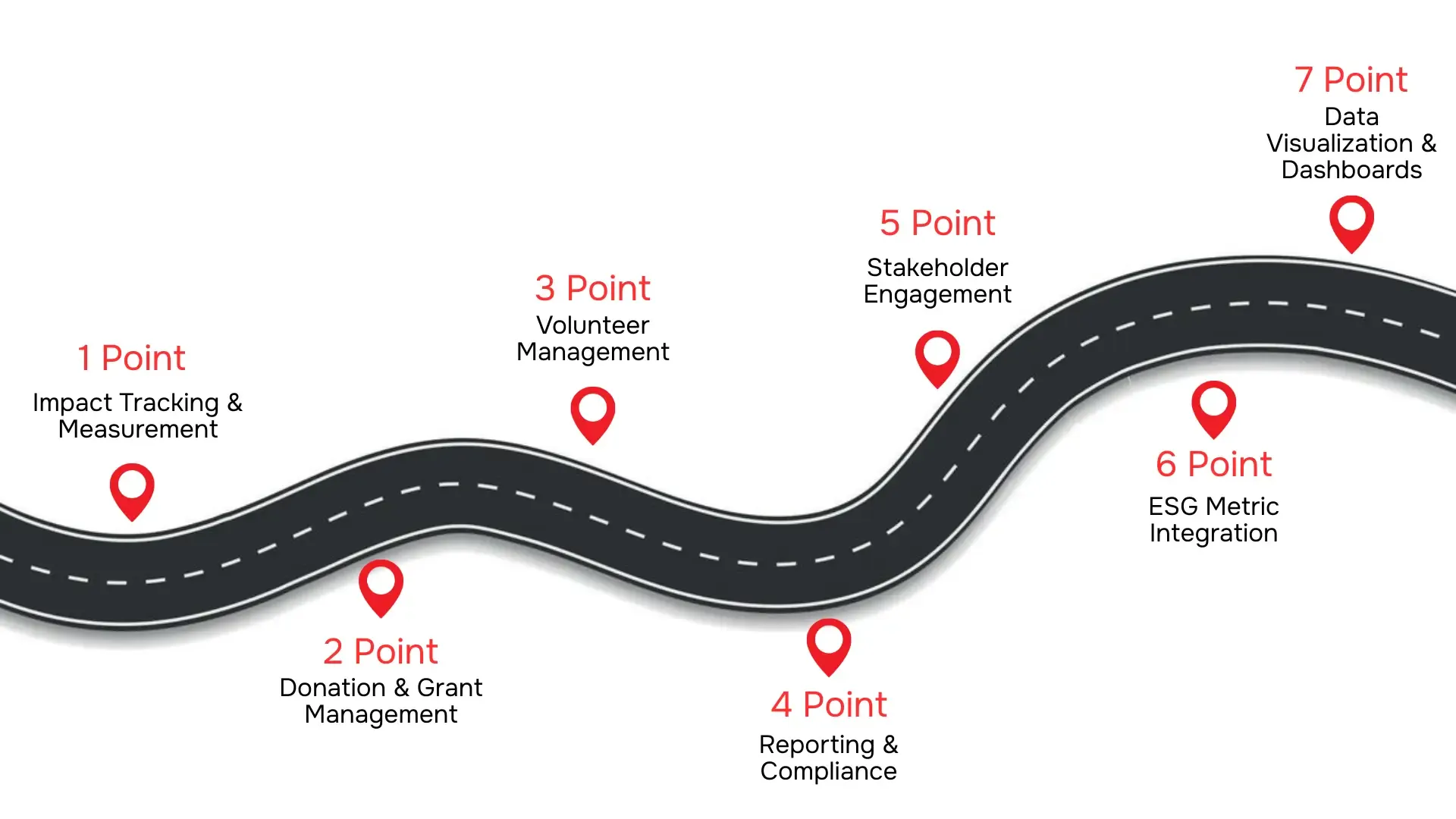
A proper and strong CSR management software is built to make the Corporate Social Responsibility (CSR) activities more organised, measurable, and impactful. Consider it the central nervous system for your impact initiatives. It takes the mess out of spreadsheets and jumbled email threads and replaces them with a slick, clear process.
Some of the key features include:
1. Impact Tracking & Measurement
Central to CSR software is the capacity for being able to measure and quantify impact. These instruments guarantee each attempt is not only measured based on set objectives, but also demonstrates social and environmental return on investment. Rather than anecdotes and stories, companies are keeping score with numbers: tons of carbon emitted saved; waste not sent to a landfill; staff time devoted to volunteer work or money given for community projects.
2. Donation & Grant Management
But the complexity of gifting so much away becomes simpler and more efficient when everything, from application portals to internal-approval workflows and auto disbursements, is handled by the right tools. It should not only provide an appropriate body with the keeper of record's special report, but also a clear audit trail from pledge to impact, and there should be no doubt in terms of monitoring on how effective a contribution has been.
3. Managing Human Resources
This wouldn’t be CSR without getting employees excited, after all. Today’s platforms make it so easy by posting opportunities; sign‑up is quick; they show who’s actually going to participate and even the impact that the hours contributed will provide. Suddenly, what was a logistical nightmare becomes a fun activity that builds morale and illustrates how much employees are giving back.
4. Reporting & Compliance
Keeping up with the laws and global standards doesn’t have to be difficult. Automated reporting tools simplify the process, aggregating secured information into a central repository, so you are not frazzled. India’s Companies Act, as well as standards such as GRI and the UN SDGs, allow organisations to easily build clean reports that are regulator-ready, saving time and guaranteeing accuracy at every stage.
5. Stakeholder Engagement
Successful CSR programs are built on open dialogue. By using the built-in dashboards and simple channels, companies can share progress with investors, listen to community feedback and tell real stories to consumers. That kind of transparency creates trust, and it helps ensure that initiatives stay focused on what stakeholders actually need.
6. ESG Metric Integration
CSR and ESG go hand in hand. The best-in-class solutions link social efforts with wider ESG-type metrics, enabling businesses to get a full picture of their sustainability performance. This not-so-gentle blending isn’t just a feel-good nicety; it’s what investors, rating agencies and regulators increasingly expect in a world that prizes accountability.
7. Data Visualisation & Dashboards
While numbers alone can be overwhelming, CSR software translates them into easy-to-read charts, dashboards, and easy-to-understand insights. This allows everyone, from employees to leadership, to immediately see the big picture, identify trends and make better decisions about where to allocate resources for maximum impact.
How It All Adds Up
These features are strong enough on their own. However, together they create a synergistic effect that changes CSR from a reactive, fragmented effort into a proactive, strategic, and transparent function. By unifying impact tracking, philanthropy, volunteering, compliance, engagement, ESG integration, and visualisation in one place. A good CSR Management Software replaces guesswork with clarity, complexity with simplicity, and scepticism with trust.
The result:
Efficient operations, measurable outcomes, and clear proof of a company’s commitment to doing good.
3. Benefits of Using CSR Management Software
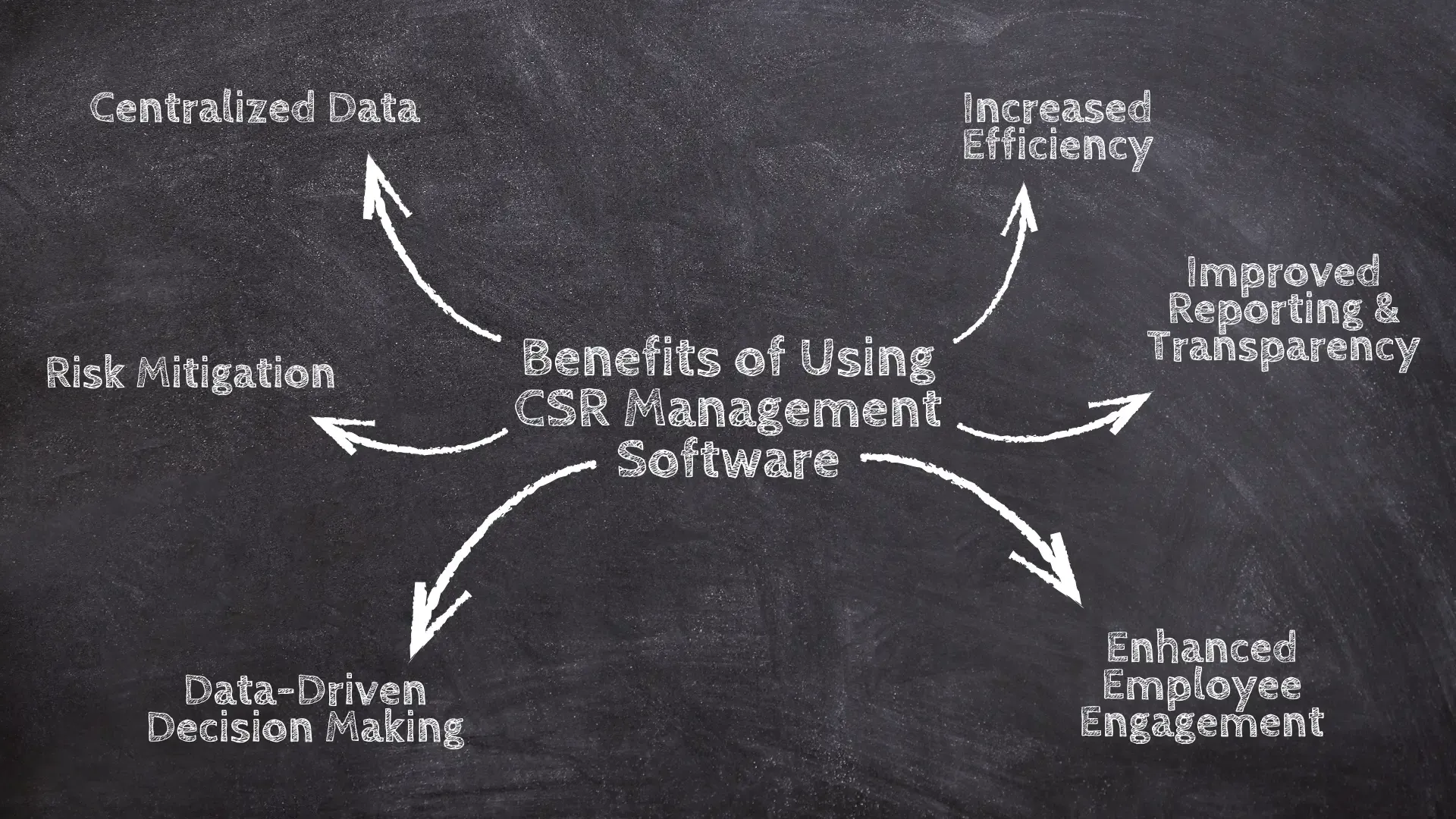
Investing in quality CSR Management Software is not just about compliance; it turns Corporate Social Responsibility into a strategic advantage. With rising stakeholder expectations and stricter regulations, companies that use CSR Platforms gain measurable benefits that go beyond philanthropy.
Key Benefits
1. Centralized Data
It serves as a single source of truth for all CSR activities, including donations, volunteer hours, and sustainability metrics. CSR Management software removes data silos and ensures that CSR leaders, employees, and auditors work from the same information.
2. Increased Efficiency
It helps automate manual tasks like data collection, reporting, and volunteer sign-ups. Studies show that these simple automations can cut CSR program administration time by up to 40%, allowing teams to focus on impact instead of paperwork.
3. Improved Reporting & Transparency
It helps generate reports that meet global standards such as GRI (Global Reporting Initiative), SASB (Sustainability Accounting Standards Board), and UN SDGs. Transparency builds trust with investors, regulators, and communities, positioning your brand as credible and accountable.
4. Enhanced Employee Engagement
User-friendly portals allow and motivate employees to volunteer, donate, and track their participation. Research indicates that companies with strong CSR engagement programs see up to 25% higher employee retention rates, making CSR software a tool for both impact and HR strategy.
5. Data-Driven Decision Making
Advanced Analytics help organisations identify which initiatives deliver the most value, spot risks early, and optimise their CSR strategies accordingly. Leading CSR management software companies now include ESG management software modules to offer predictive insights.
6. Risk Mitigation
This also helps companies stay ahead of compliance and regulatory changes. In India, where CSR spending is legally required, CSR management software ensures that companies meet their obligations while minimising reputational and financial risks.
📈 Business Advantages:
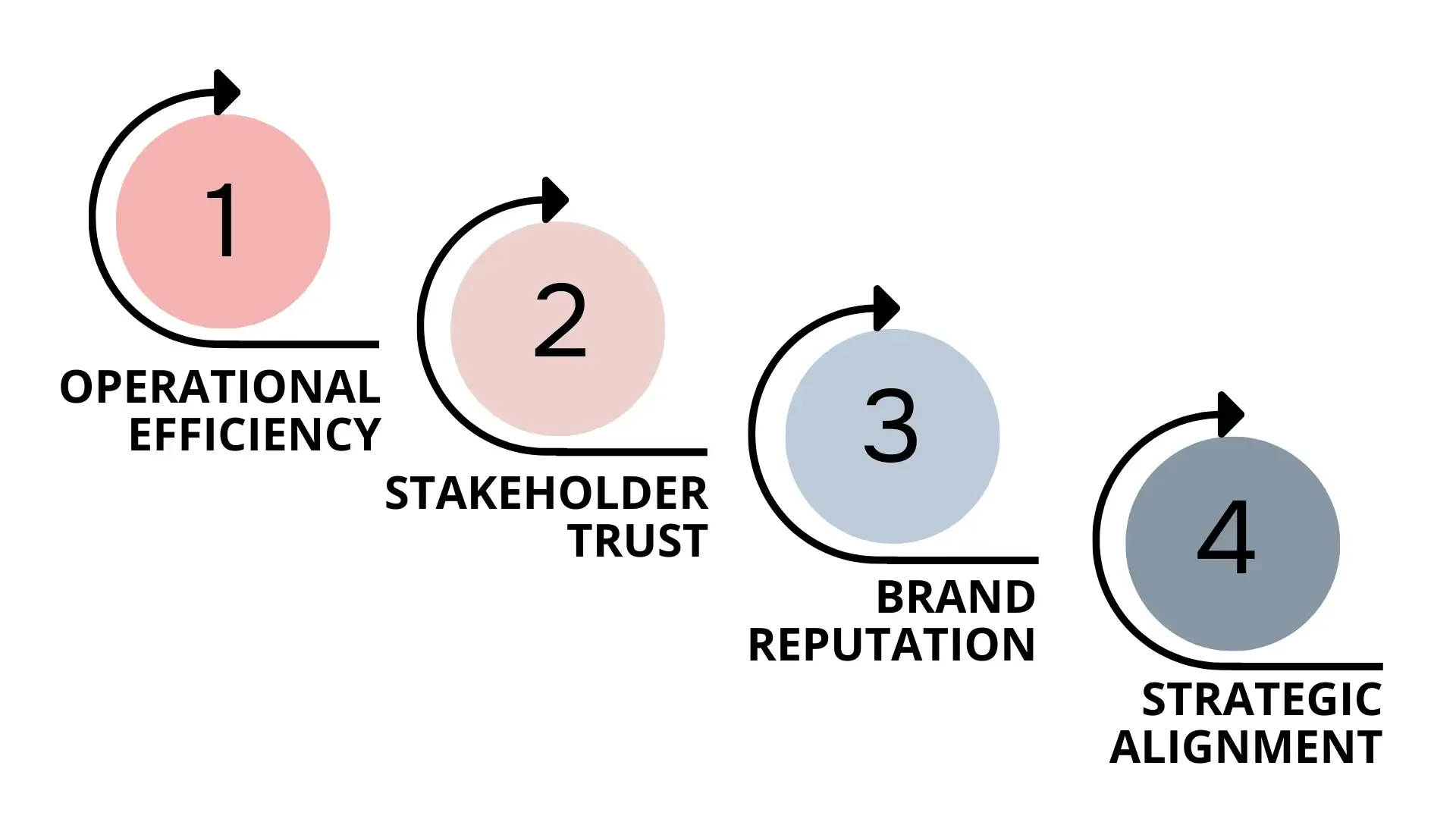
- Operational Efficiency: Streamlined workflows save time and reduce costs.
- Stakeholder Trust: Transparent reporting builds investor and community confidence.
- Brand Reputation: Showing measurable impact enhances credibility and competitive positioning.
- Strategic Alignment: CSR initiatives align with global sustainability goals, ESG frameworks, and corporate values.
4. Finding the Right Fit: What to Look for in a CSR Management Software
Now that you understand the ‘why’ and the ‘benefits’ of adopting CSR Management Software, the next critical step is choosing the right platform. The platform should align with your organisation’s unique goals, adapt as your growth, and make impact measurable and transparent.
With the increasing CSR Platforms in India and globally, knowing what to prioritise and what can be considered unnecessary can save you time and money, reduce risk, and ensure successful implementation.
Think of this section as your essential checklist. The right CSR Management Software should act as a strategic partner, not just a tool. The key criteria to evaluate while considering a tool are:
A. Essential Functional Capabilities
Your CSR platform must handle these fundamental functions easily:
- Program & Project Management: Tools to plan, launch, and track initiatives (volunteering campaigns, grant programs, sustainability projects). Features like task assignment, milestone tracking, and budget management keep projects on time and within scope.
- Volunteer & Grant Management: Streamlined systems for posting volunteer opportunities, managing sign-ups, and tracking hours. It also ensures transparency and efficiency with strong grant lifecycle management, from application and review to disbursement and impact reporting.
B. Strategic Impact & Intelligence
This is where good software becomes great, turning data into actionable insights.
- ESG Data Tracking & Analytics: Dedicated modules for environmental (carbon, water, waste), social (DEI, employee engagement), and governance metrics. Customizable dashboards and visualisations help identify trends and measure impact.
- Reporting & Disclosure: Pre-built and customizable templates aligned with global frameworks like GRI, SASB, TCFD, and UN SDGs. Easy export options (PDF, Excel) simplify disclosures to regulators, investors, and stakeholders.
C. Engagement & Communication
A CSR program’s success relies on people. The right platform should help you tell your story.
- Stakeholder Engagement Tools: Host annual sustainability reports, showcase impact stories, and connect with social media channels to spread your message internally and externally.
- Employee Engagement: User-friendly portals for volunteering, donations, and participation tracking encourage stronger involvement and retention.
D. Practical Implementation Factors
Beyond features, consider the logistical aspects that ensure long-term success.
- Ease of Use & Customisation: If the platform isn’t user-friendly, it won’t be used. Look for intuitive interfaces that adapt to your processes and scale as you grow.
- Integration Capabilities: Your CSR data shouldn’t exist in isolation. The platform should connect with HR (employee data), Finance (donations), and ERP (environmental data) systems for seamless information flow.
- Vendor Support & Pricing Model: Evaluate customer support, training resources, and implementation services. Understand whether pricing is based on users, features, or company revenue to ensure it fits your budget.
Aligning Software Choice with Organisational Needs
Before starting demos, define your “non-negotiable requirements.” Are you focused on strict compliance needs like the Companies Act (India)? Is your primary goal to boost employee engagement? Or are you preparing for intense investor scrutiny on ESG metrics?
The Best CSR Management Software is one that not only meets your requirements today but also scales to support your ambitions tomorrow. Whether you’re a smaller organisation prioritising affordability and ease of use, or a multinational organisation seeking advanced analytics and global compliance, the right CSR software solutions will actively drive your mission forward.
5. Top CSR Management Software Companies & Solutions in 2025
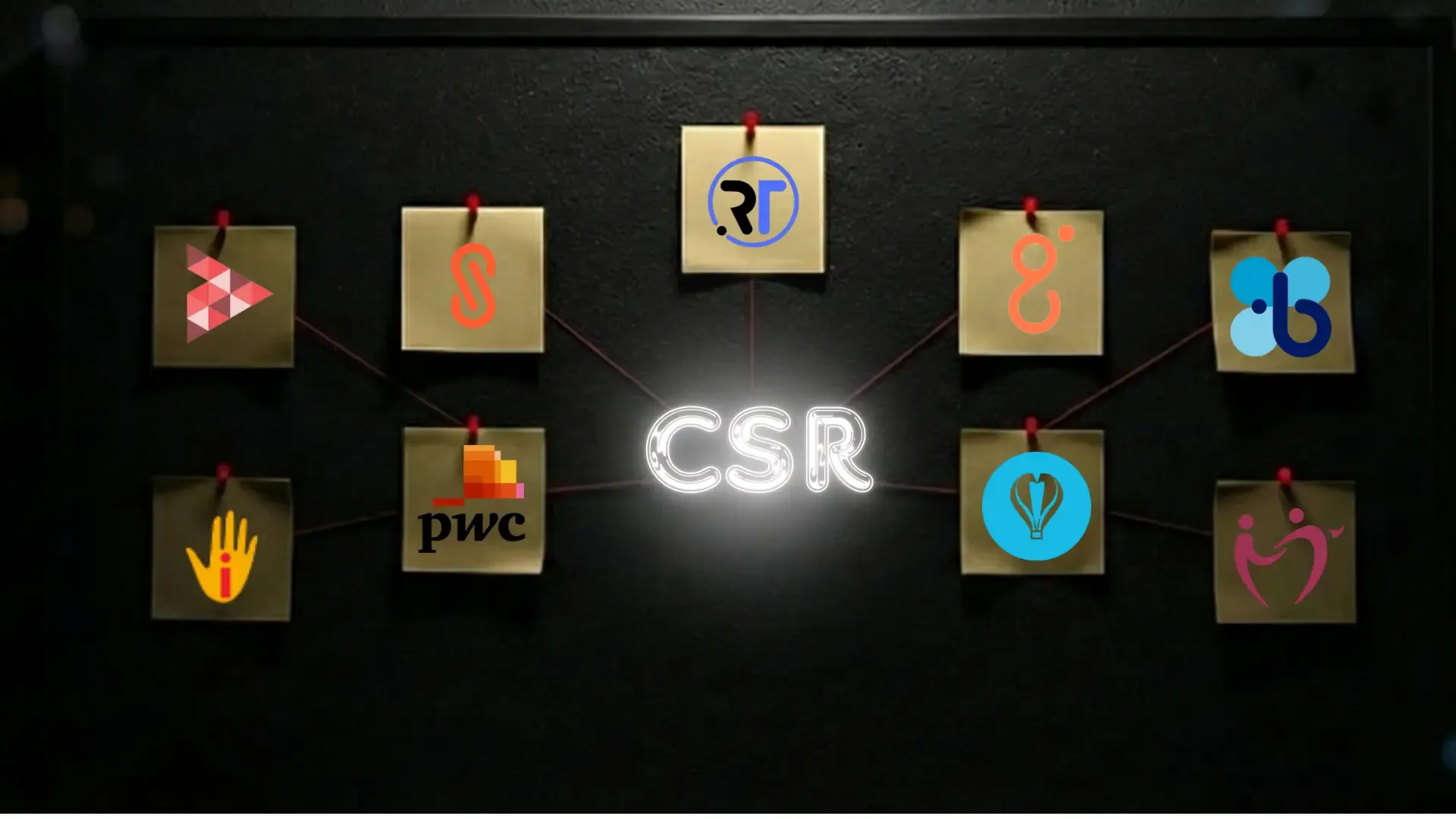
Choosing the right CSR Management Software depends on your organisation's type, CSR goals, and compliance needs. Below is an updated overview of leading platforms, both focused on India and global, highlighting their strengths, differences, and ideal use cases.
🇮🇳 India-Focused Platforms
Relific (India & Global)
An AI-driven impact intelligence platform based in Bengaluru. It offers modules like Drive-R for data integration and reporting, Surve-R for AI-assisted field data collection, and ProGran for program and grant operations. With offline sync and SDG-aligned reporting, Tata Trusts trusts it for large-scale rural and social projects. Best Fit: Large corporations and foundations managing complex, multi-state CSR initiatives.
SoulAce (India)
A CSR project monitoring and management platform designed for Indian companies. Known for grant management workflows, tools for stakeholder engagement, and reporting that meets compliance needs. SoulAce helps companies manage CSR spending under the Companies Act, 2013. Best Fit: Corporations needing compliance-focused CSR project monitoring.
TechCSR (India)
A complete CSR management and consultancy solution, trusted by 50+ corporates, NGOs, PSUs, and government bodies. It specialises in end-to-end CSR fund management, monitoring and evaluation systems, and mobile-first applications. Best Fit: Large enterprises and PSUs with extensive CSR programs.
Impact Weaver (India)
An AI-driven ecosystem that connects NGOs, CSR organisations, donors, and volunteers. It offers a unified digital platform for collaboration, impact tracking, and donor engagement. Best Fit: Community-driven CSR initiatives that need NGO-donor-volunteer collaboration.
Goodera (India & Global)
Headquartered in Bengaluru, Goodera is a leader in employee volunteering and engagement. With a large NGO network and connections to HR systems, it’s trusted by Infosys, Dell, and Wipro. Best Fit: MNCs and tech firms that prioritise employee-driven CSR.
GiveIndia (India)
India’s most reliable NGO network, offering corporate giving solutions with FCRA/80G verified partners. Trusted by Unisys, it enables easy donation management and compliance. Best Fit: Companies focused on donations and NGO partnerships.
ESG Pulse (PwC India)
A platform focused on compliance, designed for SEBI’s BRSR mandate. It offers ESG/BRSR reporting modules aligned with PwC India’s expertise. Best Fit: Listed Indian companies that prioritise ESG and BRSR compliance.
iVolunteer (India)
A volunteering management system based on Salesforce with a strong NGO network. Trusted by IBM and Cognizant, it enables structured volunteering programs. Best Fit: Companies that focus on structured volunteering initiatives.
Milaap (India)
A crowdfunding platform that supports employee-led fundraising campaigns. It is known for transparent campaigns and peer-to-peer lending. Best Fit: Organisations with hybrid or remote teams.
Chezuba (India)
A micro-volunteering platform that was founded in India. It is designed for hybrid and remote workforces, offering flexible, skill-based virtual volunteering. Best Fit: Organisations with hybrid or remote teams.
Global Platforms
Benevity (Global)
Known for its global reach and employee engagement tools. Benevity focuses on workplace giving, volunteering, and grant management. It is trusted by NGO partners like Mukti and supports standardised CSR across multiple countries.
Submittable (Global)
Works best for grantmaking and social impact programs. It has strong workflows for application management and disbursements. Submittable now has an office in Indore, India, providing localised support.
YourCause (Global)
Strong in employee giving and volunteering, integrates with HR systems. It is part of the Blackbaud ecosystem.
Bonterra (Global)
Offers a complete suite for CSR, ESG, and sustainability reporting. It is particularly effective for compliance and transparency.
Deed (Global)
Focuses on mobile-first volunteering and giving experiences. It is ideal for engaging younger, tech-savvy employees.
Metrio (Global)
Specialises in ESG data tracking and analytics. This makes it a strong choice for sustainability reporting.
Millie (Global)
Known for donation matching and employee-driven giving campaigns. It is perfect for culture-focused companies.
Comparative Snapshot
| Organisation Type / CSR Goal | Best Platform | Core Strength | India-Specific Differentiators | Pricing Model | Verified Indian Clients | Why It’s the Best Fit |
|---|---|---|---|---|---|---|
| Large Corporations & Foundations | Relific | AI-Powered Impact Analytics | AI, Offline Sync, Bengaluru HQ | Contact for Pricing | Tata Trusts | AI-driven insights, offline sync, trusted for rural/social projects |
| Corporate Foundations (Grants) | Submittable | Grant Management | India Office (Indore) | Contact for Pricing | – | Best-in-class grant workflows, localised India support |
| MNCs & Tech Firms | Goodera | Employee Engagement | India HQ, Large NGO Network | Contact for Pricing | Infosys, Dell, Wipro | Strong volunteering ecosystem, ideal for employee-driven CSR |
| Global Corporations | Benevity | Global Giving | NGO Partnerships, Alaya Acquisition | Contact for Pricing | Mukti (NGO partner) | Standardised CSR across regions, payroll giving support |
| Corporate Giving | GiveIndia | NGO Network | FCRA/80G Verified | Commission-based | Unisys | India’s most credible NGO network, seamless giving & compliance |
| Listed Corporations | ESG Pulse (PwC) | ESG/BRSR Compliance | SEBI Alignment | Contact for Pricing | – | Purpose-built for SEBI’s BRSR mandate |
| Structured Volunteering | iVolunteer | Corporate Volunteering | Salesforce-based VMS | Contact for Pricing | IBM, Cognizant | Deep NGO network, structured volunteering |
| Employee Fundraising | Milaap | Crowdfunding | Transparent Campaigns | Commission-based | – | High credibility in crowdfunding |
| Hybrid/Remote Workforce | Chezuba | Micro-Volunteering | Hybrid Workforce Focus | Per User/Month | – | Flexible, skill-based virtual volunteering |
Why This Matters
By including India-based platforms like Relific.io, Goodera, SoulAce, TechCSR, Impact Weaver, GiveIndia, iVolunteer, Milaap, and Chezuba, this comparison shows the specific regulatory and cultural environment of India. In India, CSR spending is required by law.
Organisations can now choose between AI-powered insights (Relific), compliance-focused tools (SoulAce, TechCSR, ESG Pulse), employee engagement platforms (Goodera, Benevity, iVolunteer), or community-driven ecosystems (Impact Weaver, GiveIndia, Milaap, Chezuba), depending on their CSR priorities. - Want to dive deeper? Head over to our detailed blog, Top 9 CSR Software in India (2025), where we break down the leading platforms.
6. Trends and Future Outlook
India’s CSR ecosystem is unique, shaped by mandatory CSR spending under Section 135 of the Companies Act, 2013. This regulation has sped up the adoption of CSR technology, making software platforms essential for both compliance and maximising impact. The future of CSR in India is not just about spending the required 2%. It’s about transforming that requirement into measurable social value, strategic business benefit, and global credibility.
As Indian corporates, NGOs, and foundations embrace digital transformation, here are the key trends defining the next generation of CSR Management Software in India:
AI-Powered Intelligence for Impact Optimisation
Artificial Intelligence is becoming central to CSR operations, moving the function from reactive to predictive.
- Predictive Analytics for Grassroots Impact: AI can analyse demographic data, past project results, and community feedback. It forecasts which initiatives, whether in education, healthcare, or sanitation, will succeed best in specific districts or communities.
- Automated Due Diligence & Risk Mitigation: AI helps companies screen and monitor NGO partners for credibility, financial health, and performance history. This ensures funds are used wisely and lowers compliance risks.
- Impact Validation & Compliance Reporting: Platforms like Relific are already using AI to automate reporting, identify ESG risks (such as supply chain vulnerabilities or diversity gaps), and validate program outcomes across different regions.
Deeper Integration with Business & Digital Infrastructure
The true power of CSR platforms lies in their ability to integrate smoothly with enterprise and public digital systems.
- ERP & HRIS Connectivity: Integration with systems like SAP, Tally, and HR platforms allows real-time tracking of financial flows, volunteer hours, and payroll giving. This ensures accurate audit trails and streamlined workflows.
- Unified Enterprise Strategy: CSR initiatives increasingly align with broader ESG and DEI goals. This embeds impact into enterprise strategy instead of treating CSR as a silo.
- Leveraging India Stack: Future platforms may connect with Aadhaar (for verified beneficiary onboarding, with consent) and UPI (for direct, transparent benefit transfers). This eliminates leaks and ensures every rupee reaches its intended recipient.
Evolving Regulations & Compliance Needs
India’s regulatory landscape is tightening and rapidly aligning with global standards.
- Mandatory CSR Spending Enforcement: Non-compliance continues to attract penalties. This makes reliable CSR platforms indispensable.
- BRSR Core & Value Chain Disclosures: SEBI’s Business Responsibility and Sustainability Reporting (BRSR), particularly the new Core framework, requires detailed, verified data across operations and supply chains. CSR software will develop into the primary system for managing this data.
- Global Dual-Reporting: As Indian companies grow internationally, they encounter frameworks like the EU’s CSRD. Platforms must support dual-reporting capabilities to ensure compliance with both Indian BRSR and international standards from one source of truth.
The Road Ahead for Indian CSR
The future of CSR in India lies in accountability based on data, AI-driven insights, and global co-operation. Platforms that bring together predictive intelligence, seamless integration with enterprise systems, and compliance-ready reporting will help Indian companies to:
- Ensure compliance with the Companies Act and SEBI mandates.
- Build trust with regulators, investors, employees, and communities.
- Show measurable impact that boosts brand reputation and long-term business strength.
India’s CSR journey is changing from a compliance task into a strategic tool for credibility, innovation, and sustainable growth. The leading companies will be those that use technology not just to report on the past, but to create resilient, transparent, and effective programs for the future.
7. Conclusion: From Compliance to Competitive Advantage
In today’s business landscape, investing in the right CSR Management Software is no longer optional! It is a necessity. In India, where CSR spending is legally mandated under the Companies Act, and globally, where stakeholders demand transparency, the right platform can transform compliance into a competitive advantage. What began as a mandate has evolved into a strategic lever for resilience, credibility, and long-term value.
The right CSR Management Platform is the engine that powers this transformation. By centralising data, automating reporting, and enabling AI-driven insights, modern CSR software solutions empower organisations to move beyond fragmented spreadsheets and anecdotal stories into a future of measurable, transparent, and impactful initiatives.
Why It Matters
- Demonstrate Authentic Impact: Move beyond anecdotes and prove your social and environmental contributions with credible, data-driven reporting.
- Build Unshakeable Trust: Foster transparency with regulators, investors, employees, and communities.
- Drive Strategic Value: Align CSR and ESG efforts with core business objectives, turning responsibility into a competitive advantage.
- Create Long-Term Value: Ensure every rupee or dollar spent delivers tangible outcomes for both business and society.
The message is clear: CSR is no longer a side function; it’s inseparable from business strategy. Organisations that act now, by evaluating and adopting modern CSR Management Tools, will be the ones shaping the future of responsible business.
Your Next Step Towards Strategic CSR
The change from manual chaos to strategic clarity starts with a single step. First, assess your current CSR processes. Then identify your biggest challenges, be it compliance, reporting, or showing ROI and then take action.
Go through leading platforms like Relific and other Top CSR Management Software Companies to understand how technology can transform your CSR program. Whether your focus is on compliance in India, alignment with global ESG standards, or engagement with employees, the right solution will enhance your impact.
Call to Action:
It is time to go beyond compliance and welcome transformation. The future of CSR is digital, data-driven, and strategic. Make sure your organisation is ready to lead it!
Frequently Asked Questions
1. What is CSR Management Software?
CSR Management Software is a centralised digital platform that helps organisations plan, track, manage, and report on their Corporate Social Responsibility (CSR), sustainability, and ESG (Environmental, Social, and Governance) initiatives. Think of it as an ERP system dedicated to managing and measuring your company’s social and environmental impact, from volunteer programs and donations to carbon emissions and diversity metrics.
2. Why is CSR Software important for Indian companies?
In India, Corporate Social Responsibility (CSR) spending is mandated by law under Section 135 of the Companies Act, 2013. To support this requirement, CSR software enables companies to ensure compliance with legal obligations while streamlining critical processes such as fund allocation, project monitoring, and impact reporting. By providing transparent and auditable data, these tools also help organisations build trust with regulators, investors, and communities, strengthening both accountability and credibility.
3. Is adopting CSR Management Software in India mandatory?
While the software itself is not explicitly mandated, the Companies Act, 2013, requires strict reporting on CSR spending and impact assessments. With the introduction of SEBI’s BRSR Core framework requiring granular, assured data, relying on manual tracking is a significant risk. CSR Platforms in India are becoming indispensable for ensuring accuracy, avoiding penalties, and managing the complex compliance landscape of Section 135.
4. What is the difference between CSR Software and ESG Management Software?
CSR Software typically focuses on the execution of social initiatives—volunteering, grant management, and community projects. ESG Management Software focuses on broader Environmental, Social, and Governance metrics and risk reporting. However, modern CSR software solutions like Relific and Bonterra are bridging this gap by integrating social initiatives with broader ESG metrics, providing a holistic view of corporate sustainability.
5. What should I look for when choosing CSR Software?
CSR Management Software should be more than just a database. Key features to look for include:
- Impact Tracking & Measurement to quantify outcomes.
- Grant & Volunteer Management to streamline operations.
- Automated Compliance Reporting (crucial for Indian regulations).
- AI-Powered Intelligence, a growing trend found in platforms like Relific, which offers predictive analytics for outcome validation and risk mitigation.
6. Is CSR Software only for large enterprises?
No. CSR platforms are scalable and cater to organisations of all sizes, from SMEs to large multinationals. Many vendors offer flexible pricing and modular features, allowing smaller companies to start with basic functionalities and scale as they grow.
7. How does AI enhance CSR Management Software?
AI brings predictive and analytical capabilities to CSR platforms, such as:
- Predicting program success based on historical and demographic data.
- Automating due diligence for NGO partners.
- Identifying ESG risks and validating impact outcomes.