
Key Takeaways
- The best CSR software depends on your obligation: Relific.io leads AI-powered impact operations and offline field data collection in India.
- BRSR Core assurance expands to the top 1,000 listed companies from FY 2026-27, moving CSR data into the same audit chain as financials.
- Rule 8(3) mandates independent impact assessment for companies averaging ₹10 crore-plus CSR obligation over three years, on projects above ₹1 crore.
- AI is shifting from feature to architecture: Relific, Benevity, Goodera, Transunifyy, and iAmpact now run AI-native platforms, not bolted-on analytics.
- Spreadsheet-based CSR tracking cannot survive Form CSR-2, BRSR, and Rule 8(3) reporting demands; software has become a board-level governance decision.
- Total cost of ownership matters: configuration, integration, training, and maintenance often cost 2-3 times the licence over three years. Request a three-year estimate.
CSR spending by NSE-listed companies crossed ₹22,212 crore in FY 2024-25, a 23% jump over the previous year, according to PrimeInfobase data released in April 2026. And yet, 315 obligated companies still missed the mandatory 2% threshold, and ₹3,223 crore had to be parked in Unspent CSR Accounts for future use.
Numbers like these tell you two things at once. Corporate India is now investing serious capital in social development. And most CSR teams are still under-equipped to plan, track, and report that spend with the precision boards and regulators now expect.
The tools you choose to run your CSR programme have become a governance question, not an IT one. Whether you are filing Form CSR-2, commissioning a Rule 8(3) impact assessment, or embedding CSR data into your Business Responsibility and Sustainability Report (BRSR), the platform underneath decides how audit-ready your story actually is.
This guide is a considered, source-checked comparison of the 10 CSR software platforms that matter in India this year. Every listing has been evaluated on regulatory fit, verified client history, feature depth, and India-specific strengths, not on marketing claims alone.
Quick Answer: What is the best CSR software in India in 2026?
The best CSR software in India for 2026 depends on your primary use case. Relific.io leads for AI-powered impact operations and offline-first field data collection. Transunifyy offers the widest AI-enabled feature set on a free-tier model. SoulAce remains the reference choice for independent Rule 8(3) impact assessments. Goodera and Benevity dominate employee volunteering. DhwaniRIS (mGrant) is strongest for grants governance. Submittable wins for global grant applications. CSRBOX offers an ecosystem that pairs software with implementation. SuperHumanRace is built for ESG plus CSR reporting. iAmpact focuses on AI-driven CSR-2 and BRSR automation.
Match the tool to your compliance obligation, not the reverse.
Why CSR Software Has Become a Board-Level Decision in 2026
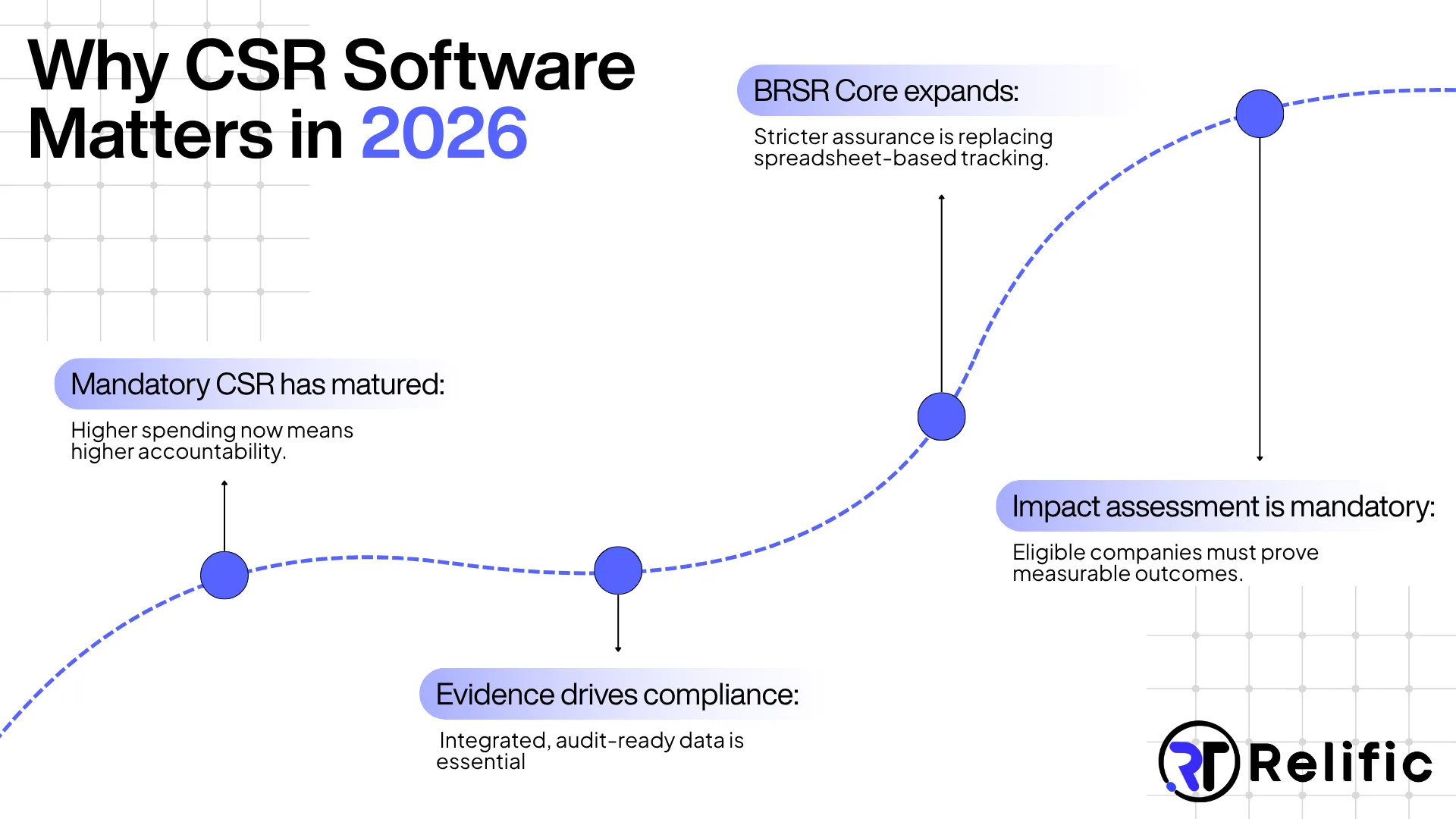
Section 135 of the Companies Act, 2013, made India the first country in the world to legislate mandatory CSR spending. Twelve years in, three shifts have fundamentally changed what CSR software has to do.
Spending has scaled, but so has scrutiny: FY 2024-25 saw NSE-listed companies commit ₹22,212 crore, a 23% rise over FY 2023-24. Reliance Industries alone spent ₹1,309.5 crore, followed by HDFC Bank (₹1,068 crore) and Tata Consultancy Services (₹960 crore). Boards are no longer asking "how much did we spend?"; they are asking "what did that spend actually change?"
Compliance now runs on evidence, not intent: Form CSR-2 filings, Schedule VII tagging, Rule 8(3) impact assessments, and the CSR sections of BRSR reports all draw from the same underlying data. If your project ledger, beneficiary records, and fund utilisation reports live in disconnected spreadsheets, reconciling that data for four different regulatory outputs is where teams lose weeks every quarter.
BRSR Core assurance is expanding fast: SEBI's phased plan takes BRSR Core assurance from the top 150 listed companies in FY 2023-24 to the top 500 in FY 2025-26, and the top 1,000 from FY 2026-27, per SEBI Circular No. SEBI/HO/CFD/CFD-SEC-2/P/CIR/2023/122 dated 12 July 2023. Community investment and social impact metrics now sit inside a third-party assured disclosure. Excel-based CSR tracking cannot survive that level of audit trail.
Impact assessment is legally required, not optional: Rule 8(3) of the Companies (CSR Policy) Rules mandates independent impact assessment for companies with an average CSR obligation of ₹10 crore or more over the last three financial years, for any project with an outlay above ₹1 crore that has completed one year. In FY 2024-25, PrimeInfobase reported ₹42.58 crore was spent on impact assessments across 152 companies.
The takeaway: CSR software in 2026 is not a productivity tool. It is the system of record for a legally scrutinised spend category.
How We Evaluated the Top 10 CSR Software Platforms
Selection was based on ten weighted criteria:
- Regulatory fit with Section 135, Schedule VII, CSR-2, BRSR, and Rule 8(3)
- India presence, whether headquartered, offshore, or partner-supported
- Verified client references from publicly disclosed relationships
- Depth of features across planning, monitoring, evaluation, and reporting
- Field data collection capability, including offline and mobile
- AI-native features versus retrofitted analytics
- Grants and NGO due-diligence workflows
- Employee volunteering and giving capabilities
- Security posture (ISO/IEC 27001, SOC 2, GDPR, data residency)
- Pricing transparency and total cost of ownership
Each platform below is scored against the use case it fits best. No single platform wins on every dimension; the goal is to help you match the tool to your specific compliance and impact obligations.
CSR Software India: 2026 Decision Matrix
| Platform | Best For | India HQ / Presence | Key Differentiator | Verified Indian Clients |
|---|---|---|---|---|
| Relific.io | AI-powered impact operations, offline field data, one-stack CSR + M&E + volunteering | Bengaluru, India | AI-R generates projects, forms, dashboards, and reports from an uploaded MoU. Offline-first mobile with on-device SQLite. Section 135 built into the workflow | Tata Trusts, Kalike, IDF, Rise Against Hunger, FWWB, Hindalco, SGIF and Sehgal Foundation |
| Transunifyy | AI-powered end-to-end CSR programme management with free-tier access | India | SocioAI generates proposals and reports. Combines project management, grants, marketplace, and SROI on one platform | Not publicly disclosed |
| SoulAce | Third-party impact assessment plus project MIS | Mumbai, India (since 2009) | 15+ years of on-ground evaluation experience across 3,000+ projects, 28 states, 200+ districts | Tata Sons, Reliance Foundation, HUL, IBM, L&T, Kotak Mahindra Bank |
| DhwaniRIS (mGrant) | Grants governance and multi-NGO programme MIS | Delhi NCR, India (since 2012) | SKOCH Award winner (Silver, 2025) for grant governance transformation. Open-source based | Adani Foundation, LIC Housing Finance, Migrants Resilience Collaborative, WHO |
| Goodera | Employee volunteering at global enterprise scale | Bengaluru, India (co-HQ) | 2M+ employee volunteers, 40,000+ NGOs, 90+ countries. Goodera AIX for AI-native volunteering | Target, Gap, Dell, Amazon, P&G |
| Benevity | Global corporate purpose platform (giving, volunteering, grants) | Calgary, Canada (global) | AI-native Enterprise Impact Platform. 150+ countries. Match Assurance cuts decline rates from 30% to <3% | Global multinationals with India operations |
| SuperHumanRace | Integrated ESG plus CSR reporting on a single stack | New Delhi, India (since 2016) | AI/ML platform serving both ESG and CSR. Powered Capgemini's B9 skilling platform with NITI Aayog | Capgemini (B9 platform), corporates in construction & real estate |
| Submittable | Grants, scholarships, and application-heavy programmes | Missoula, USA (India support in Indore) | Best-in-class applicant and reviewer experience. Configurable forms and workflows | Global; not publicly disclosed for Indian corporates |
| CSRBOX | Ecosystem: software + implementation + advisory + intelligence | Ahmedabad, India | 1-in-3 BSE 200 companies as clients. Government facilitation partner in UP. Own implementation arm (BharatCares) | Lupin Foundation, Dalmia Bharat, IBM India, NSDC |
| iAmpact | AI-powered CSR-2, BRSR, and impact assessment automation | India | Purpose-built for MCA regulatory workflow. One-click compliance report simulation | Not publicly disclosed |
The 10 Best CSR Software Platforms in India (2026)
Choosing the right CSR software in India requires more than just a global reputation. It demands platforms that can navigate India’s unique socio-economic challenges, offer multilingual and offline functionality, and demonstrate real impact through credible partnerships. Below is a comprehensive review of the top CSR software platforms for 2026, evaluated on their on-the-ground presence, client history, feature innovation, and India-specific strengths.
1. Relific.io: Best for AI-Powered Impact Operations and Offline Field Data
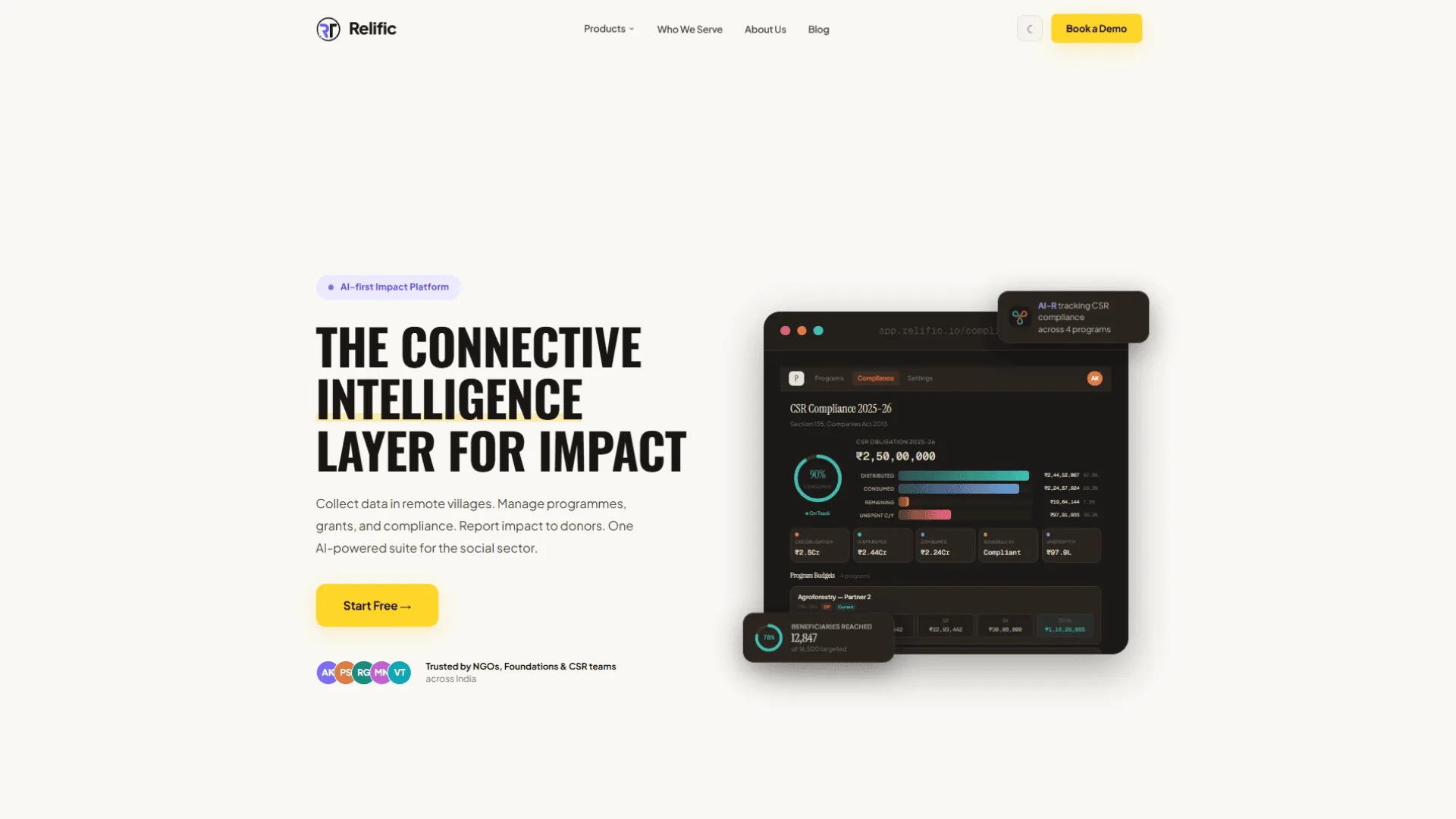
Relific is a Bengaluru-headquartered impact management, tracking, and reporting platform purpose-built for the Indian social sector. Its three-product suite, Surve-R for AI-assisted data collection, ProGran for programme and grants management, and Voluntee-R for volunteer engagement, sits on a single data layer with an in-house AI copilot called AI-R.
Where most CSR platforms treat compliance as a reporting output, Relific treats it as a workflow. Section 135 obligation tracking, Schedule VII tagging, budget attribution across multiple companies, and Theory of Change frameworks are all first-class objects, not reporting layers bolted on top.
Key features:
- AI-R can generate a full project structure, budget tree, KPI list, and forms from an uploaded MoU or grant letter
- Offline-first mobile data collection using on-device SQLite, engineered for zero-connectivity field environments
- Section 135 compliance dashboard with 2% obligation tracking, multi-company portfolio views, and unspent account monitoring
- Drag-and-drop dashboard builder with cross-form computed fields
- Natural-language querying in English and Hindi through a purpose-trained Data Studio
- ISO/IEC 27001:2022 certified with GDPR-aligned PII field protection
India-specific strengths: Trusted by Tata Trusts, Kalike, IDF, Rise Against Hunger, FWWB, Hindalco, SGIF and Sehgal Foundation. Purpose-built vocabulary for Indian CSR (Schedule VII, Section 135, FCRA-adjacent workflows) means less configuration and more day-one usability.
Best for: Foundations, CSR teams, and impact investors running multi-state programmes who need one connected system for field data, compliance tracking, and donor reporting.
Pricing: Contact-based pricing with a free tier available for smaller programmes. Book a demo at relific.io/book-demo.
Consider it if: You are tired of stitching together a survey tool, a project tracker, a dashboarding layer, and a manual compliance file. Relific replaces that stack.
2. Transunifyy: Best All-in-One AI-Powered CSR Platform on a Free Tier
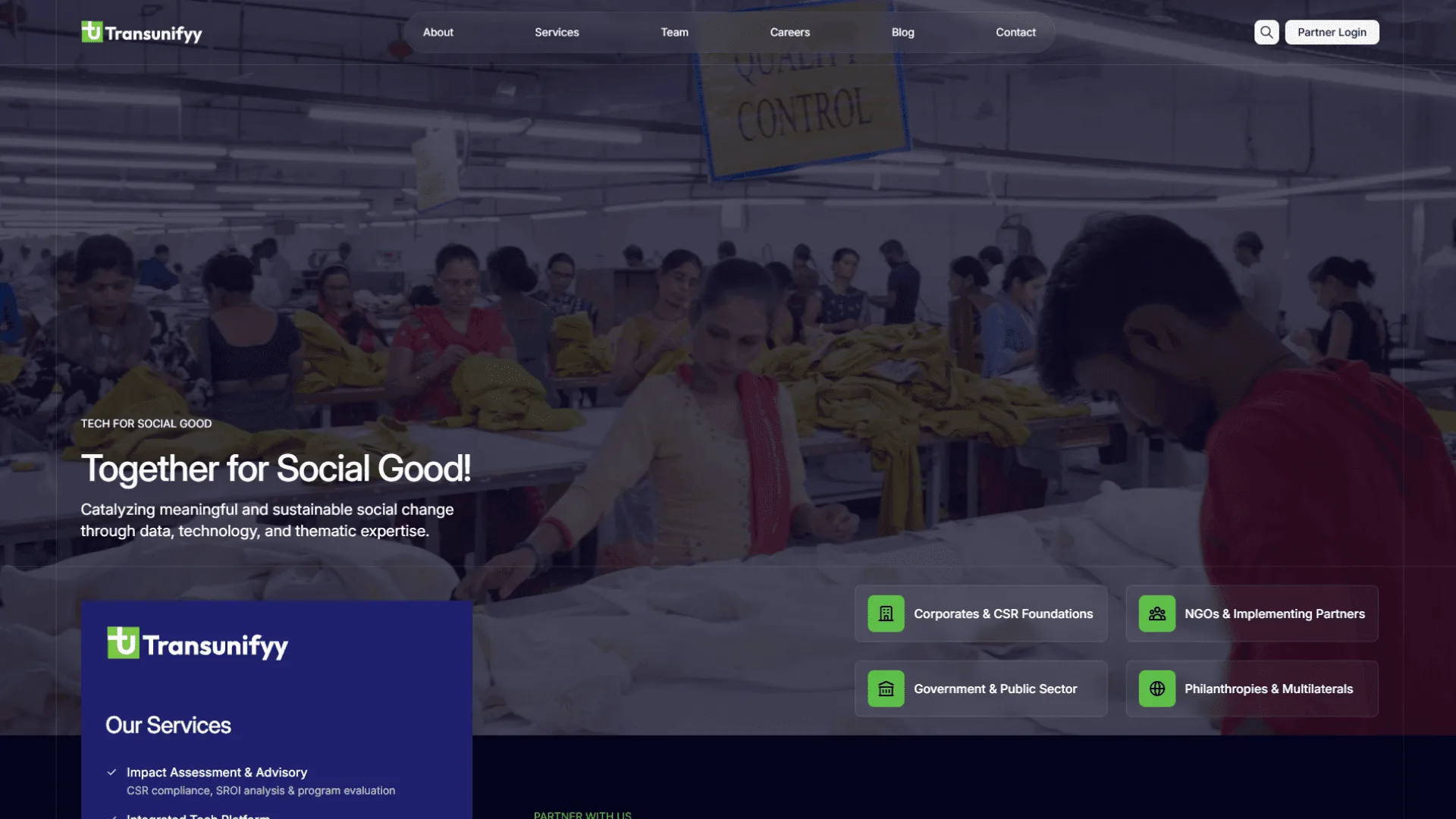
Transunifyy is an AI-powered CSR management platform built by social sector professionals with reported experience across 200-plus Indian districts. Its signature capability, an in-built AI called SocioAI, generates project proposals, impact narratives, and structured reports from raw field data.
Key features:
- Integrated NGO marketplace with in-platform due-diligence workflows.
- SocioAI for AI-assisted reporting, proposal writing, and narrative generation.
- Mobile field data collection with beneficiary tracking.
- Social Return on Investment (SROI) calculation.
- Real-time dashboards across the CSR project lifecycle.
- Compliance workflows aligned to Section 135, Schedule VII, and CSR-2.
India-specific strengths: Free unlimited access model reduces adoption friction for foundations and mid-sized corporates. Deep familiarity with Indian implementing-partner workflows.
Best for: Corporates and NGOs that want an end-to-end platform without committing capital before proving fit.
Pricing: Free unlimited access on core modules; enterprise features on request.
Consider it if: You want to consolidate multiple tools and are open to putting an AI copilot at the centre of your workflow.
3. SoulAce: Best for Independent Rule 8(3) Impact Assessments
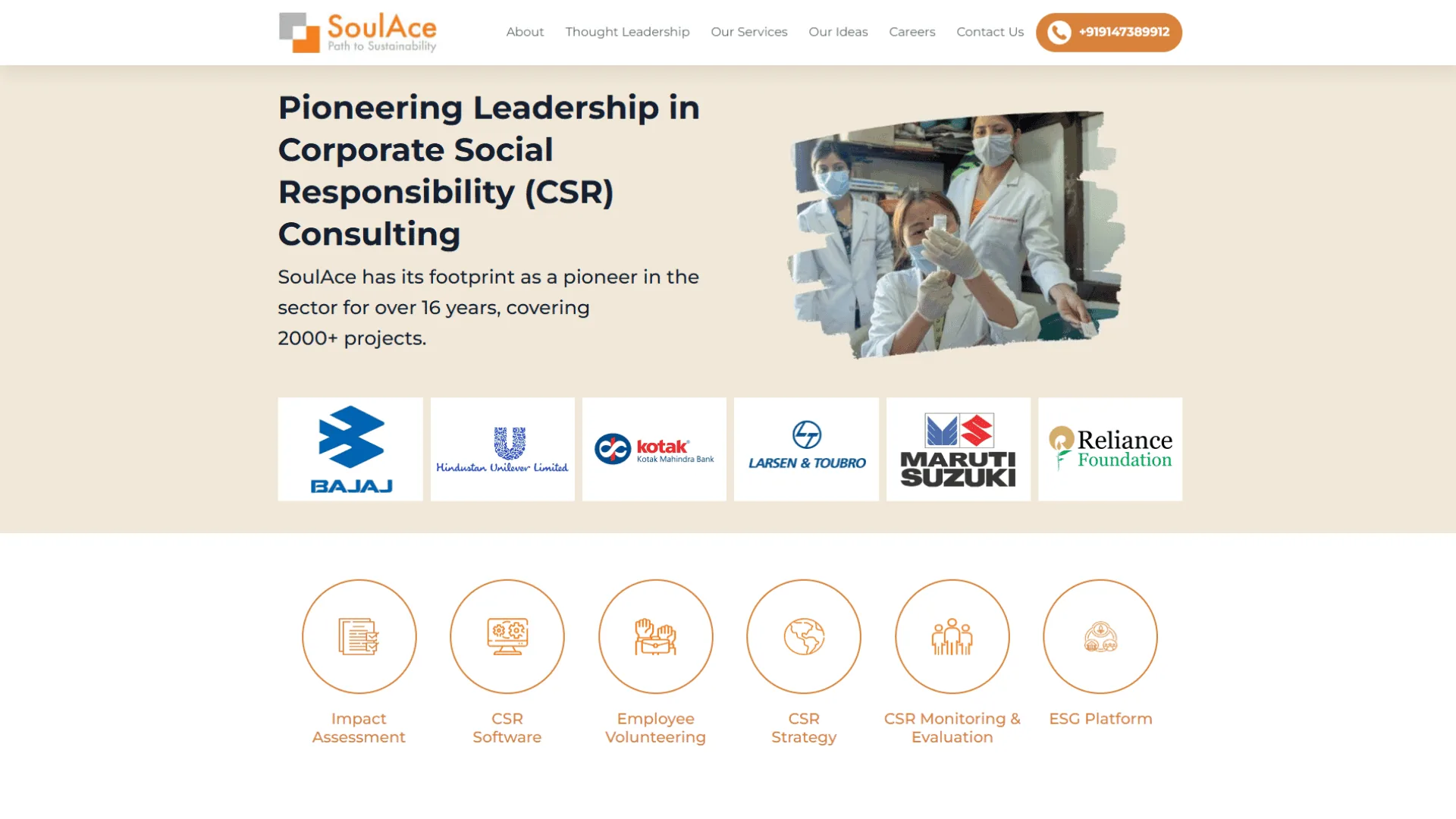
Established in 2009, SoulAce is a Mumbai-based CSR consultancy and technology firm that has delivered over 3,000 CSR projects across 28 states and 200-plus Indian districts. It is one of the few Indian players that combines a project management platform with 15-plus years of hands-on evaluation experience.
Where SoulAce is distinct: it addresses Rule 8(3) of the Companies (CSR Policy) Rules, the impact-assessment obligation that most CSR platforms treat as an afterthought. Its methodology aligns with OECD-DAC evaluation criteria and produces reports that are Board-defensible.
Key features:
- AI-enabled dashboards for real-time project monitoring
- Geo-tagging and remote monitoring workflows for field transparency
- Fund utilisation review and third-party impact assessment methodology
- Web and mobile access designed for low-connectivity NGO field workers
- ISO/IEC 27001:2013 compliant hosting on AWS
India-specific strengths: Publicly disclosed client references include Tata Sons, Reliance Foundation, Hindustan Unilever, IBM, Larsen & Toubro, and Kotak Mahindra Bank, giving it a rare depth of enterprise credibility.
Best for: Large Indian corporates and conglomerates that need audit-ready third-party impact assessments and day-to-day project monitoring in the same system.
Pricing: Contact-based, quoted per engagement scope.
Consider it if: Your CSR obligation crosses the ₹10 crore three-year average and you need Rule 8(3) impact assessments filed alongside your Board and annual CSR reports.
Related reading: Relific vs SoulAce: Which CSR Platform Should You Choose in 2026?
4. DhwaniRIS (mGrant): Best for CSR Grant Governance and NGO Partner Management
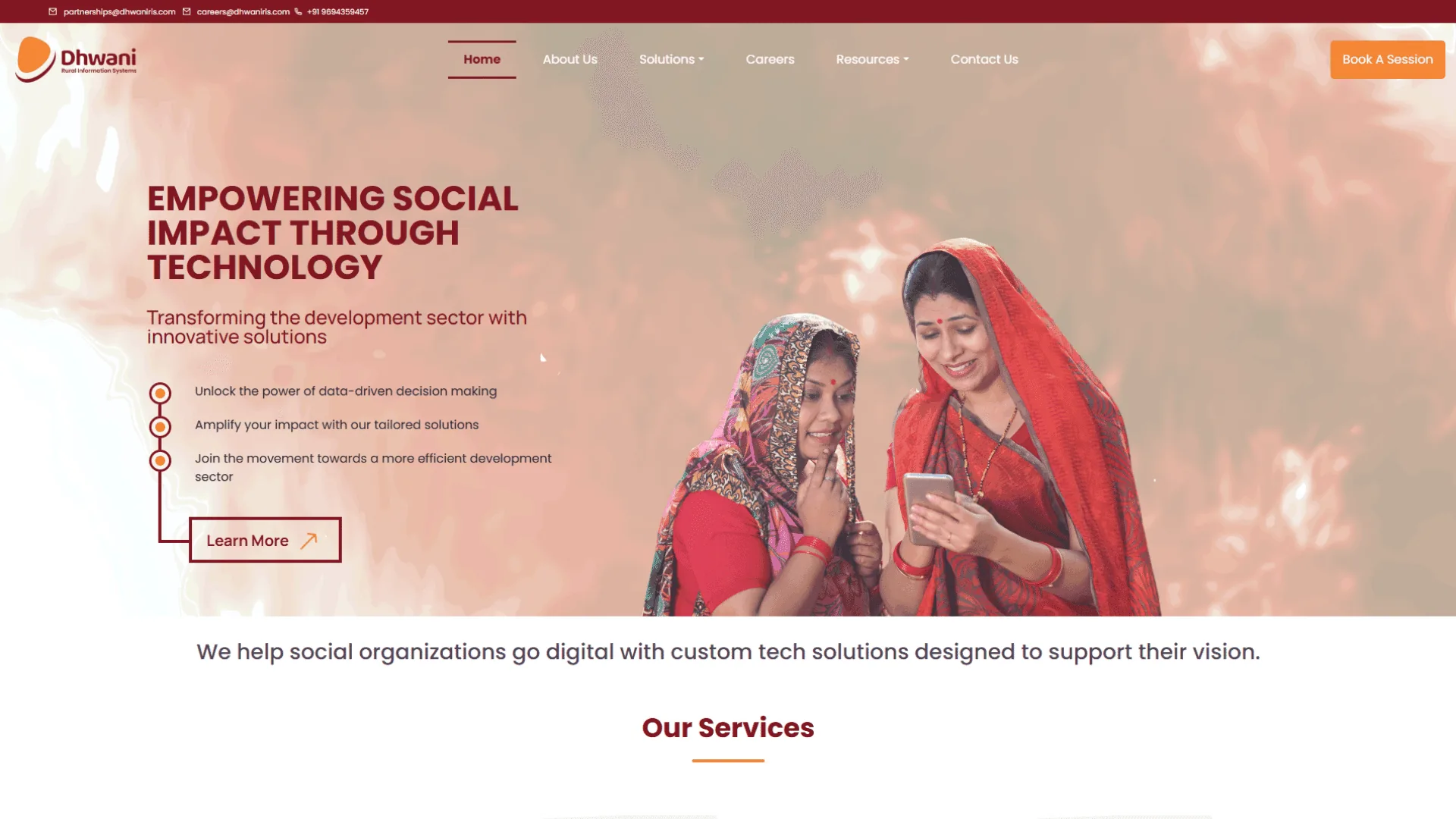
Founded in 2012, DhwaniRIS (Dhwani Rural Information Systems) is a Delhi-NCR-based ICT4D firm with over 100 ICT4D professionals building technology for NGOs, foundations, CSR teams, and government partners. Its flagship CSR product, mGrant, won a SKOCH Award (Silver) in September 2025 for transforming CSR grant governance in India.
Key features:
- End-to-end grant lifecycle management: proposal, review, disbursement, milestone tracking, close-out
- Multi-partner dashboards designed for programmes with many NGO implementing partners
- No-code form builder (mForm) for programme MIS
- Power BI-based reporting and visualisation dashboards
- Built on open source frameworks for cost-effective customisation
India-specific strengths: Publicly disclosed collaboration with Migrants Resilience Collaborative, Adani Foundation, LIC Housing Finance, and WHO. Founder-led team with deep IRMA-rooted development sector understanding.
Best for: Foundations and CSR teams managing multiple NGO partners across states, and needing rigorous grant governance and MIS reporting.
Pricing: Contact-based, with strong reputation for cost-effective open-source-based deployments.
Consider it if: Your CSR portfolio has 10+ NGO partners and grant governance is where your team currently loses the most time.
5. Goodera: Best for Global Employee Volunteering at Enterprise Scale
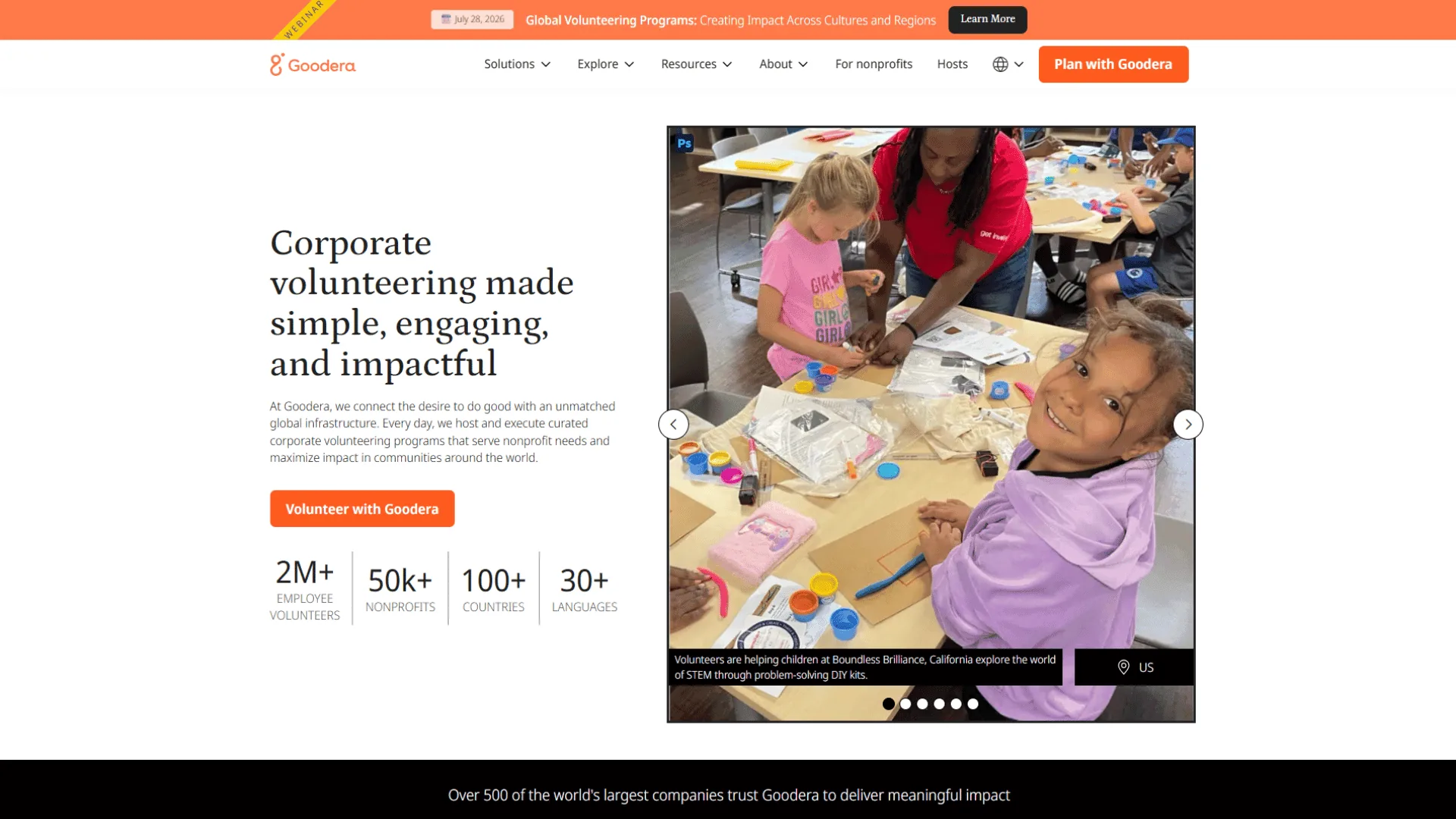
Founded in 2014 and co-headquartered in Bengaluru and Menlo Park, Goodera is a global leader in corporate volunteering. Its platform has enabled over 2 million employee volunteers across 40,000-plus nonprofits in 90-plus countries, managing over $500 million in CSR capital.
In February 2026, Goodera announced an API integration with Benevity, signalling continued market consolidation in the volunteering technology space. In May 2026, it launched Goodera AIX, an AI-native volunteering offering built around three pillars: Illuminate, Activate, and Integrate.
Key features:
- Global network of vetted NGO partners for turnkey volunteering events
- Skill-matching and hyperlocal opportunity discovery
- WhatsApp Business Platform integration for volunteer communication
- AI-enabled volunteer matching, coordination, and impact reporting
- Real-time impact dashboards for boards and communications teams
India-specific strengths: Publicly disclosed enterprise clients include Target, Gap, Dell, Amazon, and P&G. Deep vendor familiarity within the Indian corporate ecosystem, including Infosys, Wipro, and other technology majors.
Best for: Multinationals and technology firms that treat employee volunteering as a core lever of talent engagement.
Pricing: Enterprise-tier, contact-based pricing.
Consider it if: Employee volunteering is a headline CSR pillar for your organisation and you need a globally consistent programme with local execution.
6. Benevity: Best for Global Corporate Purpose Programmes
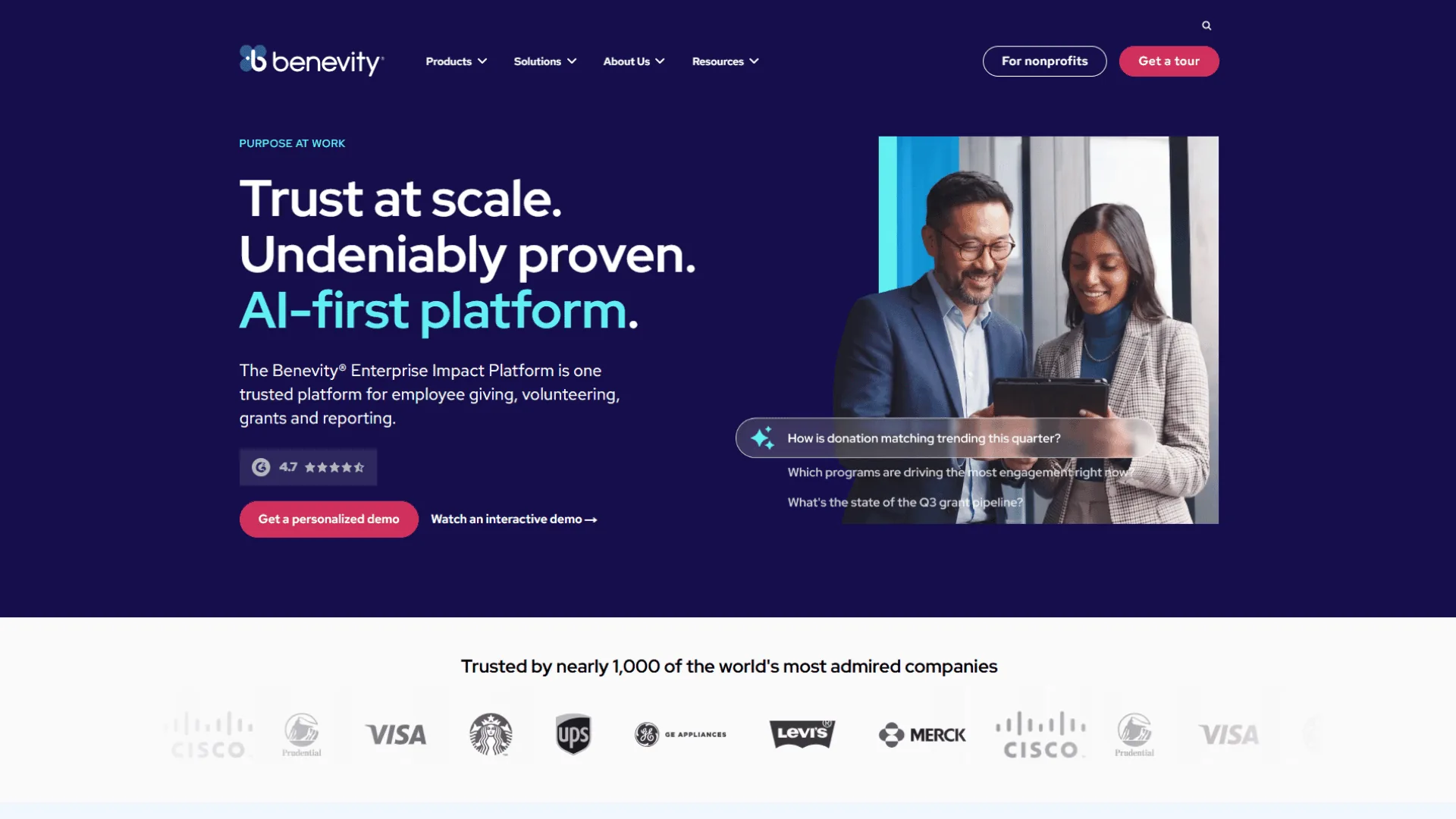
Benevity is a Calgary-based certified B Corporation and the industry's most comprehensive enterprise impact platform. Built over 17 years, it operates in more than 150 countries and, as of its June 2026 announcement at Benevity Live!, is transitioning to a fully AI-native architecture.
Benevity's Enterprise Impact Platform unifies employee giving, volunteering, grants management, employee resource groups, and impact reporting on a single system, backed by nonprofit due diligence, secure global disbursements, and connected risk mitigation.
Key features:
- Match Assurance (AI reads employee donation receipts and auto-submits matching requests, reducing decline rates from 30% to less than 3%)
- Grant Summaries and Grants Scoring (AI-driven grant application review)
- Impact Workspace (agentic AI, launching later in 2026)
- 22-language support
- SOC 2 Type II compliance and enterprise-grade risk mitigation
India-specific strengths: No India headquarters, but strong presence via global multinationals with India operations. Its 2020 acquisition of Alaya deepened workplace giving capability, and the Goodera API integration expands India-usable volunteering coverage.
Best for: Global corporations standardising CSR strategy across geographies.
Pricing: Enterprise-tier, contact-based.
Consider it if: You are running a multi-country CSR programme and India is one of several jurisdictions, not the sole focus.
7. SuperHumanRace: Best for Integrated ESG and CSR Data Reporting
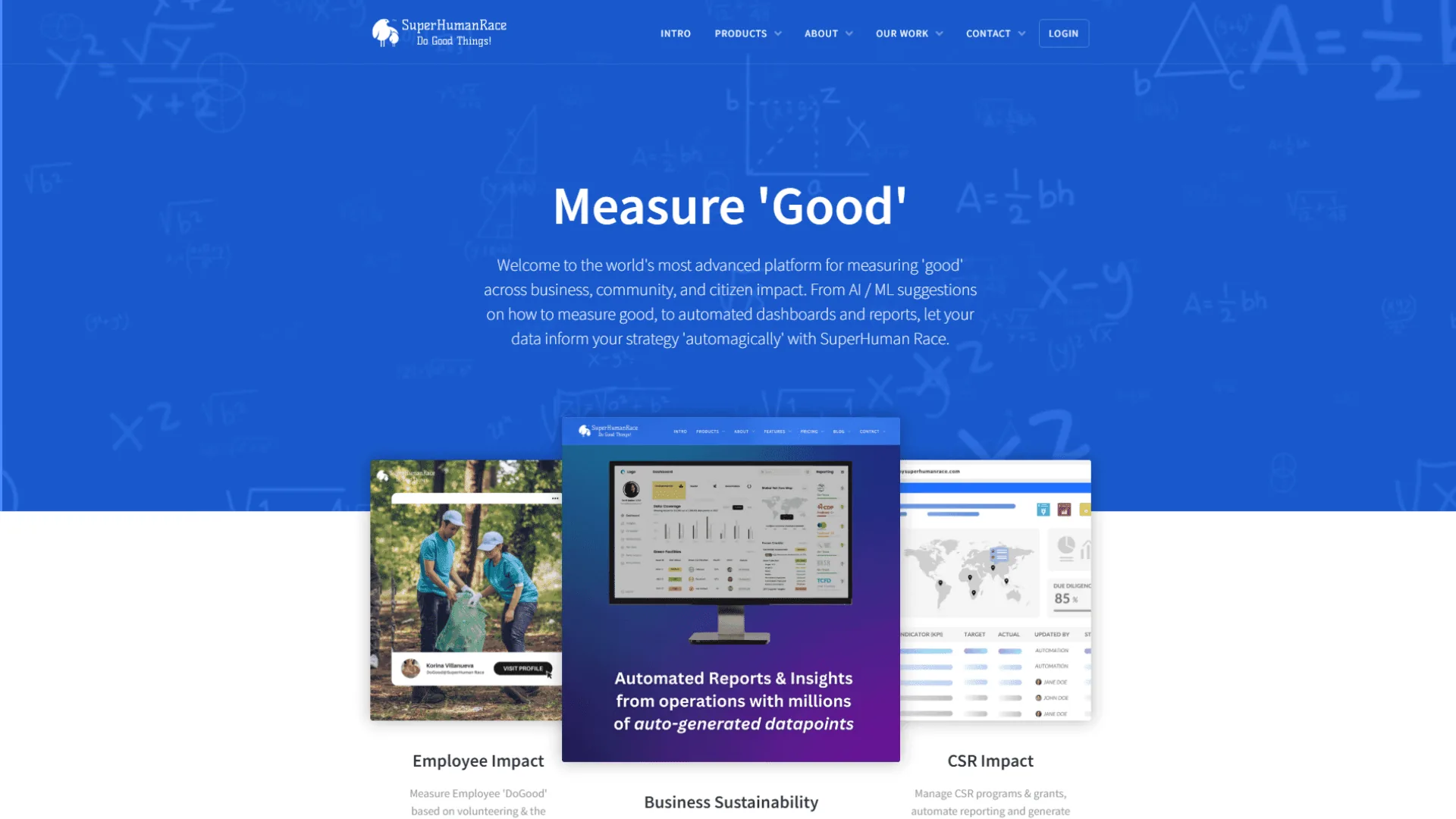
SuperHumanRace (SHR) is a Delhi-based sustainability and impact technology firm founded in 2016. It sits at the intersection of ESG reporting, CSR management, and employee engagement. In February 2026, Capgemini's Corporate Responsibility team launched the B9 Skilling Platform on SHR's infrastructure, in alignment with NITI Aayog's Viksit Bharat vision.
SHR is one of the few Indian platforms that can carry a company's ESG data, CSR programme data, and employee engagement data on a single AI/ML-driven stack, making it especially useful for listed companies filing both BRSR and CSR disclosures.
Key features:
- SHR Data Platform for ESG, CSR, and business data with AI-driven insights
- Automated Social Return on Investment (SRoI) and equity insights
- Product-level emissions tracking for value-chain reporting
- Employee "DoGood" tracking for sustainable-lifestyle impact
- Automation of sustainability reporting frameworks (UN SDGs, GRI, BRSR)
India-specific strengths: Strong presence in Indian construction and real estate (millions of square feet of ESG-tracked residential and commercial space). Publicly disclosed collaboration with Capgemini and NITI Aayog.
Best for: Listed corporates whose CSR programme is being reported alongside BRSR Core assurance and value-chain ESG disclosures.
Pricing: Contact-based.
Consider it if: Your CSR team and sustainability team share reporting responsibility and you want one platform under both.
8. Submittable: Best for Grant Applications and Scholarship Programmes
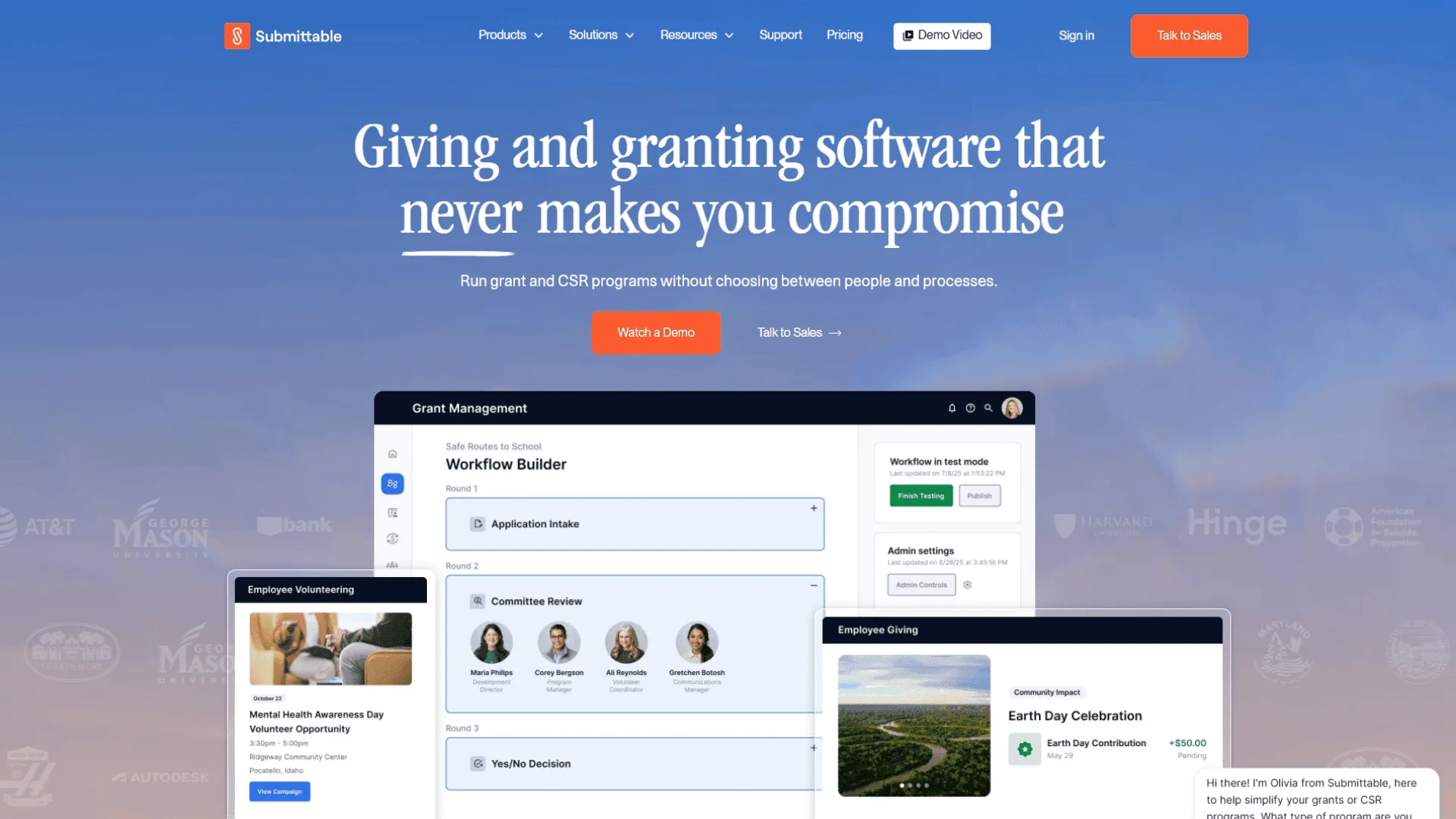
Founded in 2010, Submittable is a US-headquartered social impact platform used by thousands of foundations, government agencies, and corporates. It has a strong reputation for applicant experience, making it a natural fit for grant, scholarship, fellowship, and community-award programmes.
Key features:
- Drag-and-drop form and workflow builder for application intake
- CRM-style grantee relationship management
- Automated eligibility checks and reviewer collaboration
- Employee giving, volunteering, and matching modules
- WeHero-powered volunteer experience packages (post-acquisition)
India-specific strengths: Submittable operates a technology and support hub in Indore, giving it localised support capacity for Indian foundations. Some functionality feels fragmented due to acquisitions, and it does not natively cover Indian regulatory workflows like CSR-2, so it is best paired with a Section 135-aware tool.
Best for: Foundations, corporate foundations, and universities running high-volume grant, scholarship, or fellowship programmes.
Pricing: Tiered subscription; enterprise pricing on request.
Consider it if: Your CSR programme is grant-heavy and application intake plus reviewer workflow is your primary bottleneck.
9. CSRBOX: Best Ecosystem Platform Combining Software, Implementation, and Intelligence
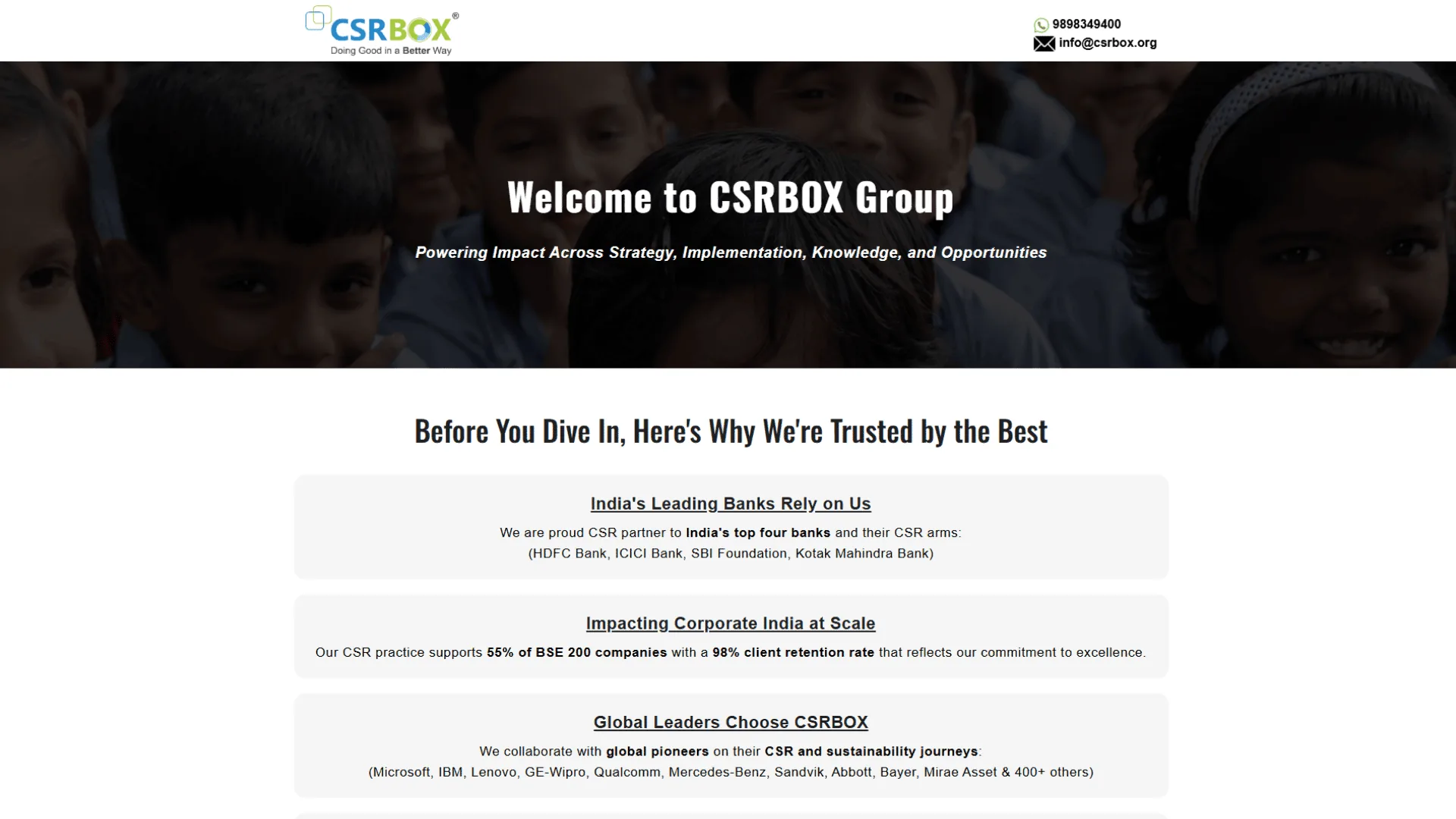
CSRBOX is India's leading CSR knowledge and impact intelligence platform, and by any measure the country's largest CSR ecosystem player. One in three BSE 200 companies is a CSRBOX client. Its footprint spans platform intelligence, implementation delivery via BharatCares, advisory through Impact Practice, and knowledge products.
Its "SynergyConnect" partnership expands its software offering to CSR management, project tracking, and impact reporting for corporates and NGOs. Combined with its 30,000-plus mapped CSR projects and 24-state delivery presence, CSRBOX offers something rare: a platform with an implementation arm behind it.
Key features:
- CSR project marketplace with pre-mapped feasibility studies
- Impact assessment and third-party evaluation services
- ESG-linked community investment strategy
- Official CSR Facilitation Partner of the Government of Uttar Pradesh
- Deep data intelligence engine on Indian CSR trends
India-specific strengths: Publicly disclosed testimonials from Lupin Foundation and partnership with NSDC, Dalmia Bharat, and IBM India. Runs the India CSR Summit and NGOBOX platform. Deep, unmatched proprietary data on the Indian CSR ecosystem.
Best for: Corporates that want their software platform, implementation partner, and ecosystem intelligence provider to be the same entity.
Pricing: Engagement-based; software subscriptions available separately.
Consider it if: You are new to CSR at scale or want implementation, strategy, and technology under one roof.
10. iAmpact: Best for AI-Automated CSR-2 and BRSR Compliance Reporting
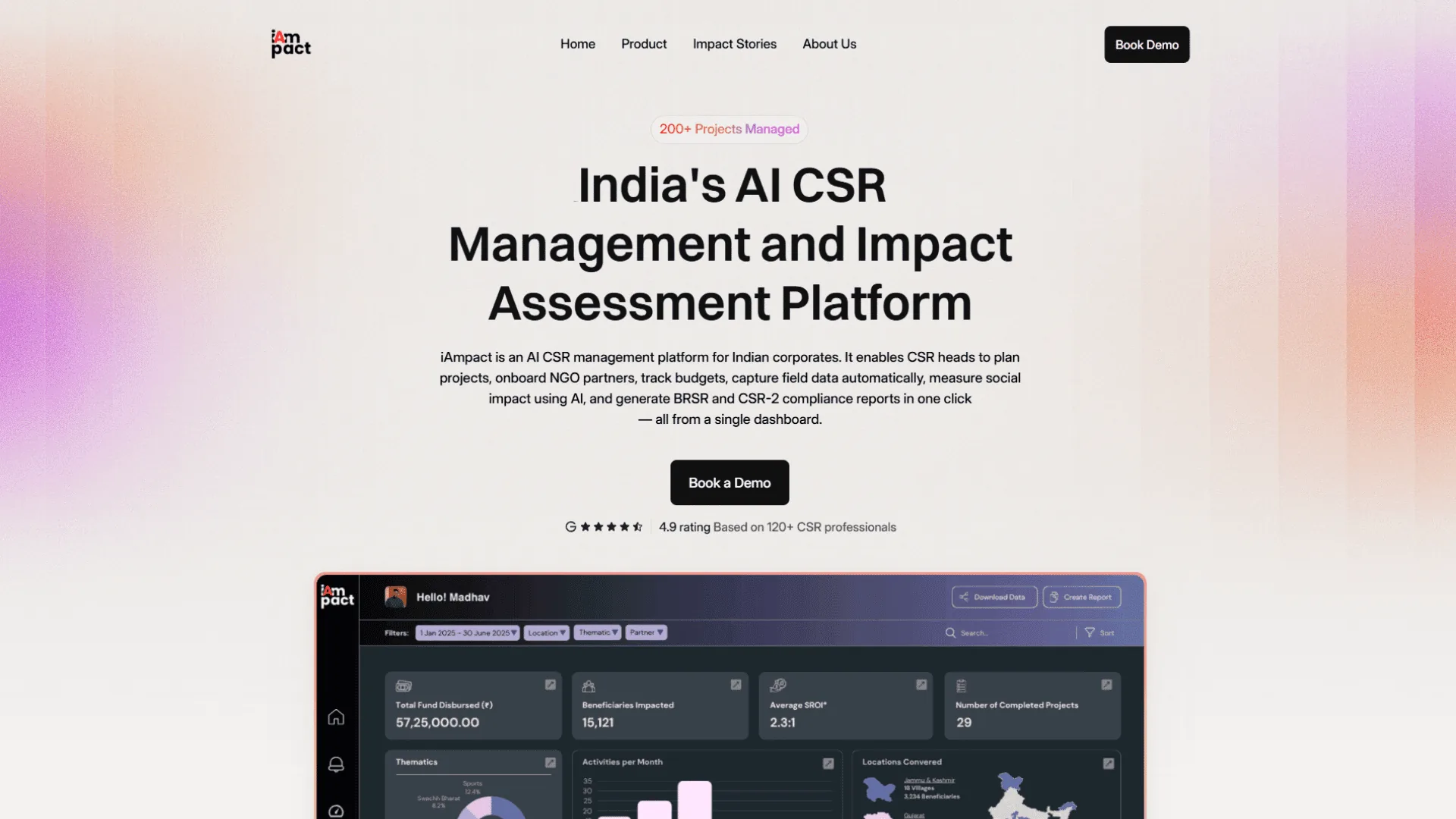
iAmpact is an Indian AI-CSR platform explicitly built for the regulatory workflow: CSR-2 simulation, BRSR CSR-section automation, and impact assessment reporting. Where most platforms treat compliance filings as an export layer, iAmpact treats them as the primary product.
Key features:
- CSR-2 report simulation aligned to the latest Ministry of Corporate Affairs (MCA) requirements
- Automated BRSR CSR-section generation
- One-click Impact Assessment Report generation
- NGO due-diligence workflows and partner onboarding
- Customisable dashboards for KPI, budget, and beneficiary tracking
- GIS-based project monitoring
India-specific strengths: Purpose-built around Indian regulatory requirements. Frequent product updates aligned to MCA circulars.
Best for: CSR teams whose Board-level pain is not project delivery but the six-week grind of preparing CSR-2, BRSR, and impact assessment filings each cycle.
Pricing: Contact-based.
Consider it if: Compliance reporting takes more of your team's time than programme delivery, and you want AI to compress that cycle.
Buyer's Guide: How to Choose the Right CSR Software in India
Choosing a CSR platform is not a features exercise; it is a fit exercise. Six questions to work through with your CSR head, CFO, company secretary, and Board CSR committee before shortlisting:
1. What is your regulatory obligation profile?
-
If your average CSR obligation crosses ₹10 crore over three years, Rule 8(3) impact assessment is mandatory. You need a platform that either runs assessments (SoulAce, CSRBOX) or integrates cleanly with an independent assessor.
-
If you are in the top 1,000 listed entities by market cap, BRSR reporting is mandatory. Look for platforms that generate the CSR section of BRSR reports directly (Relific, iAmpact, SuperHumanRace).
-
Every obligated company files Form CSR-2. Choose a platform where CSR-2 outputs are pre-built, not custom exports.
2. Do you run programmes directly, through implementing agencies, or both?
PrimeInfobase reported that 26% of NSE-listed companies spent directly on CSR in FY 2024-25, 35% used only implementing agencies, and 37% used both. Each model has different platform requirements. Direct-implementation platforms need strong field-data and beneficiary-tracking modules. Implementing-agency-heavy programmes need strong grants, due diligence, and multi-partner MIS.
3. What is your team's technology maturity?
A team with a data analyst and a CSR manager can extract value from AI-native platforms like Relific, Transunifyy, or Benevity. A three-person team without dedicated tech capability will get more from an ecosystem player like CSRBOX where implementation support is bundled.
4. Where does your CSR spend actually happen geographically?
If your programmes run in remote rural areas across states (as most large Indian CSR programmes do), offline-first mobile data collection is non-negotiable. Platforms without proven offline capability will fail in the field.
5. Is employee engagement a headline objective?
If yes, you likely need a specialised volunteering platform (Goodera, Benevity, Voluntee-R by Relific) either as your primary tool or plugged in alongside your CSR MIS.
6. What is your total cost of ownership over three years?
The software licence is one line item. Configuration, integration with SAP or Oracle, annual maintenance, user training, and change management often together cost 2 to 3 times the licence over three years. Ask every vendor for a three-year TCO estimate before signing.
What is Changing in CSR Software in 2026: Five Trends Reshaping the Market
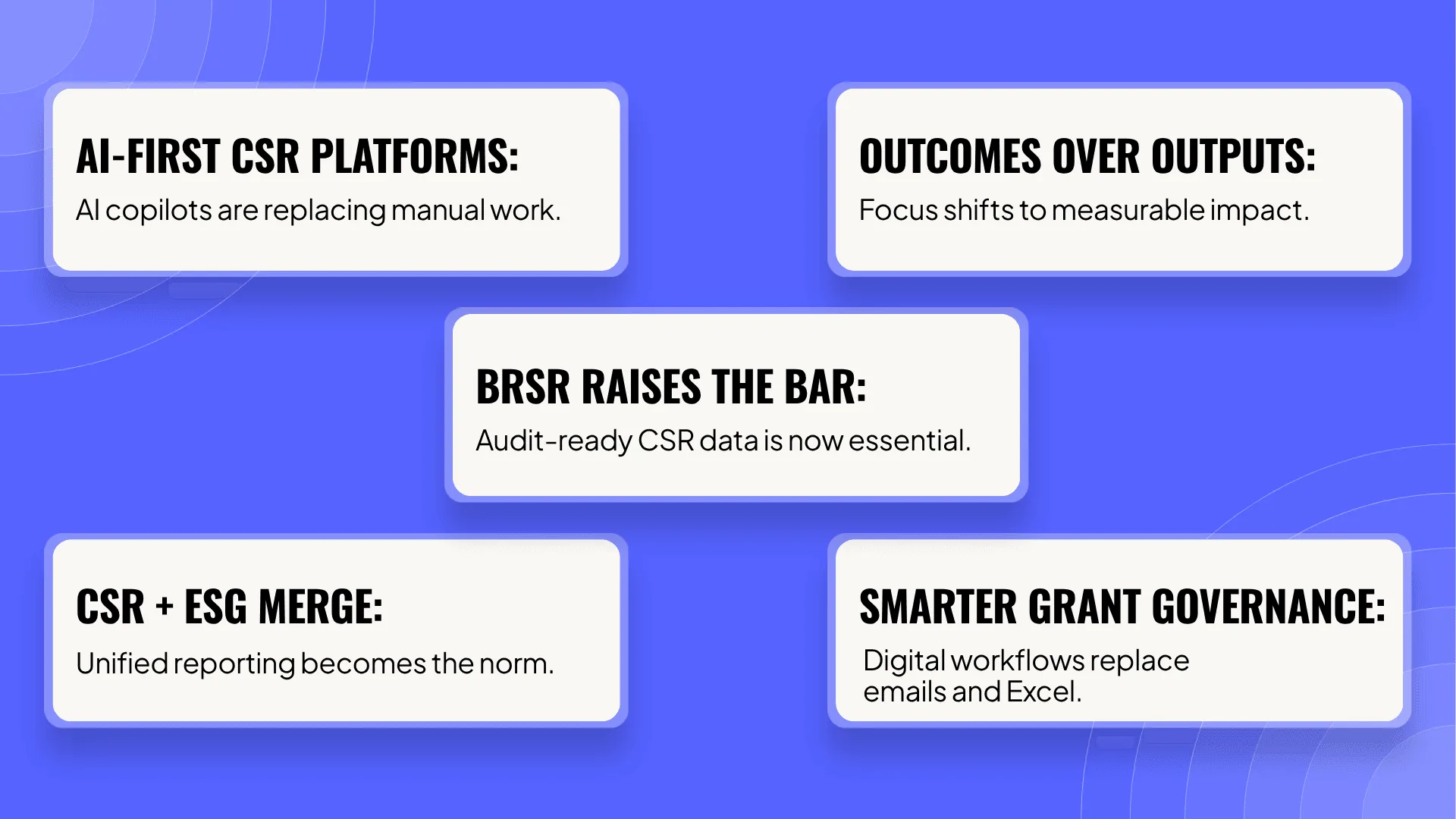
AI is moving from feature to architecture: Benevity, Goodera, Relific, Transunifyy, and iAmpact have all shifted from "AI features" to "AI-native platforms" in the last 18 months. Match Assurance at Benevity has cut match-request decline rates from 30% to under 3%. AI-R at Relific generates full project structures from uploaded MoUs. SocioAI at Transunifyy drafts full impact reports. Expect the AI copilot to become the primary interface for CSR work within two years.
Impact-outcome measurement is displacing output tracking: Boards are no longer satisfied with beneficiary counts. They want Social Return on Investment (SROI), cost-per-outcome, and Theory of Change alignment. Platforms without a defensible outcomes framework are being downgraded in RFPs.
BRSR Core assurance is pulling CSR data into the CFO's office: With BRSR Core assurance expanding to the top 1,000 listed companies from FY 2026-27, CSR data will pass through the same audit chain as financial data. That moves data quality, versioning, and evidence trails from nice-to-have to non-negotiable.
CSR and ESG teams are consolidating: Historically separate, ESG and CSR reporting are now built from overlapping datasets. Platforms like SuperHumanRace and Relific are designed for that consolidation. Standalone tools will increasingly need to integrate with sustainability reporting stacks.
Grant governance is being professionalised. SKOCH's recognition of DhwaniRIS's mGrant reflects a broader move: grant workflows that were run on email and Excel are being brought inside formal governance systems, especially in foundations disbursing large NGO grants.
Conclusion: Match the Platform to the Obligation
The best CSR software is the one that fits your regulatory profile, programme model, and team structure, not the one with the loudest brand voice. In 2026, that increasingly means picking a platform that treats compliance as a workflow, impact as an outcome, and AI as an architecture rather than a marketing line.
If you are running large-scale rural programmes with multiple NGO partners, need offline-first data collection, and want AI to compress your reporting cycle, Relific.io is designed for that stack. If your obligation is dominated by impact assessments, SoulAce has 15-plus years of specialised experience. If grants governance is your bottleneck, DhwaniRIS's mGrant is purpose-built for it.
The one thing you cannot afford in 2026 is a spreadsheet-based CSR programme carrying a Board-level obligation.
About the Author
Manjunatha Thyagaraj is the Founder of Relific Technologies, an ISO/IEC 27001:2022 certified AI-powered impact management platform for the Indian social sector. He works with foundations, CSR teams, and impact investors on the systems, frameworks, and technology that turn CSR compliance into measurable social outcomes. Connect with the Relific team at contact@relific.io or book a demo.
Frequently Asked Questions
CSR software is a system of record for corporate social responsibility programmes. It manages the CSR project lifecycle, from planning and NGO due diligence, through budgeting and disbursement, to field monitoring, impact evaluation, and regulatory reporting. In India, that includes Section 135 obligation tracking, Schedule VII tagging, Form CSR-2 filing, Rule 8(3) impact assessments, and the CSR section of BRSR reports.
There is no single "best" for every situation. Relific.io is the leading choice for AI-powered impact operations and offline field data collection. SoulAce is the reference choice for independent impact assessments. DhwaniRIS's mGrant wins for grant governance. Goodera and Benevity lead employee volunteering. Match the platform to your primary compliance obligation and programme model.
No. Section 135 mandates the 2% CSR spend, CSR committee, CSR policy, disclosure, and impact assessment where applicable, but not the software you use to comply. However, given the volume of data required for Form CSR-2, BRSR, and Rule 8(3) impact assessments, doing this on spreadsheets is now practically impossible for any obligated company at scale.
CSR software manages the operational lifecycle of your CSR programme: projects, grants, beneficiaries, impact, and CSR-specific reporting. ESG software manages your broader sustainability disclosures under BRSR, GRI, or similar frameworks, and covers environmental data (emissions, energy, water), social data (workforce, community), and governance data. Platforms like SuperHumanRace and Relific bridge both.
Not technically. CSR-2 is a form on the MCA portal. But most obligated companies find that assembling the underlying data (project details, spend by Schedule VII activity, implementing partner information, unspent-account reconciliation) is where the time actually goes. Software that maintains this data in a CSR-2-ready format compresses filing from weeks to hours.
Some CSR platforms generate the CSR section of BRSR reports directly (Relific, iAmpact, SuperHumanRace). For the full BRSR filing, especially BRSR Core with third-party assurance, you may still need a dedicated sustainability reporting platform or your statutory auditor's toolkit. Ask vendors specifically what BRSR outputs they generate.
DhwaniRIS's mGrant and CSRBOX are strongest for multi-partner grants governance. SoulAce adds independent impact assessment on top. Relific brings AI-driven programme management, offline field-data collection, and multi-partner dashboards on the same platform.
Not out of the box. Global platforms typically do not natively handle Form CSR-2, Schedule VII tagging, Rule 8(3) impact assessment workflows, or FCRA-related workflows. For India-headquartered CSR obligations, pair a global volunteering or grants platform with an India-native compliance tool.
Pricing varies from free tiers (Transunifyy core) to six-figure annual licences (Benevity, Goodera at enterprise tier). Beyond the licence, expect implementation (2 to 4 months), integration with financial systems, training, and annual maintenance, which together often total 2 to 3 times the annual licence over three years. Ask for a three-year TCO.
Most Indian CSR teams report 3 to 6 months for a full implementation, including configuration, integration, data migration, and user training. AI-native platforms like Relific advertise 30-day go-lives for MoU-driven project setup. Confirm the timeline in writing during vendor selection.